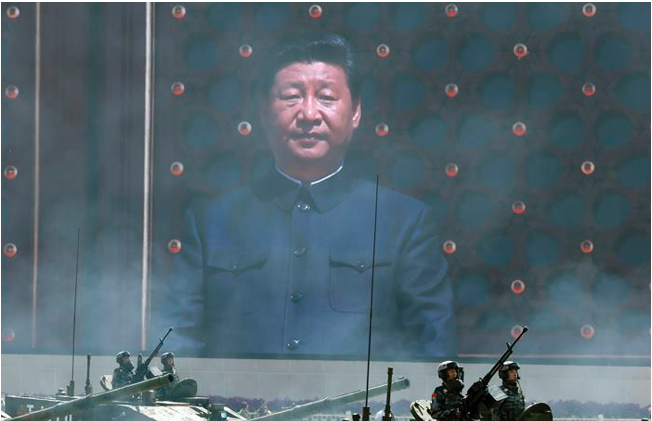
Blog

  • Privacy-as-Security

    Privacy-as-Security

    Privacy and national security are in a form of quantum entanglement over the internet. Stratpass Corp defined the issue five years ago in terms of “Privacy-as-Security,” and centering on the need for greater legal power instituted in the individual right to consent, not consent, or withdraw consent to a number of things that happen to their data, identity, reputation, and safety when they go onto the public internet. All of which raises the issue of how to realize and enforce informed, effective consent, and privacy as a duty in the corporate realm.

    Privacy-as-Security was front and center on Privacy Day, addressed by Apple’s Tim Cook below. Cook reinforces the need for fixes for problems explored in the Summer 2020 docudrama, “The Social Dilemma,” starring the founders of the Center for Humane Technology.

    The neglect of Privacy-as-Security in law and technology has led to exploits driving the current crises-convergence within human cognitive and social functioning across a spectrum of human activities: political, legal, military, intelligence, academic, technological, and in the social fabric underlying all of these. Tim Cook urges timely data transparency and consent reforms in the below video discussing the effects. Waiting is not an option. As Cook says in the video, “A social dilemma cannot be allowed to become a social catastrophe.”


    Reform is essential. See also the film “The Social Dilemma,” if you have not seen it yet.

  • Writing on the Kremlin Wall: Putin’s government arrests 4,500 Russians and Counting

    Writing on the Kremlin Wall: Putin’s government arrests 4,500 Russians and Counting

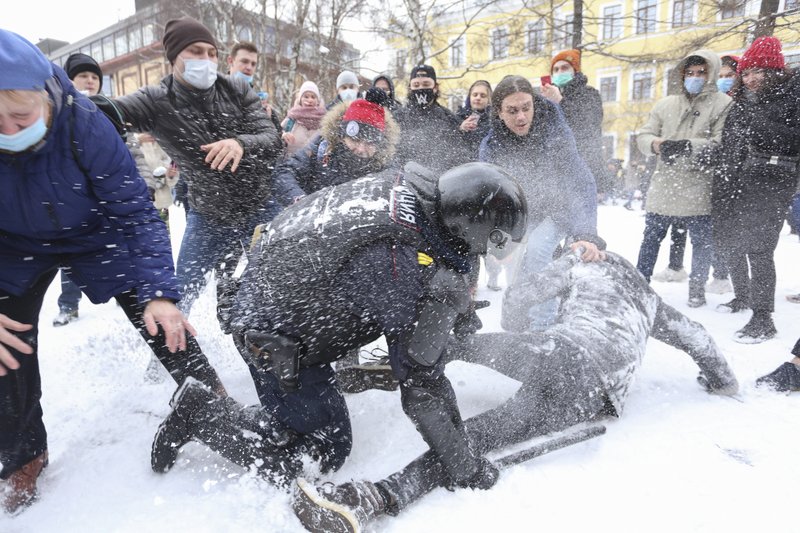
    With 4,500 arrests and counting during Navalny freedom protests, Putin’s authoritarianism is showing its deterministic premise that individuals’ free will should not clash with the will of the state, no matter the letter and spirit of the laws. Alexei Navalny was poisoned, recovered in Germany, and was swiftly arrested and jailed on returning to Russia. The irony of the Beatles-McCartney lyric ‘Back in the USSR, you don’t know how lucky you are, boy,’ comes to mind in reflection on the treatment of Navalny and other Russians seeking lawful redress and individual freedoms.

    The authorities in Moscow and St. Petersburg now likely have the arrestees’ photos with facial recognition points recorded. History echoes in what Daniel Yergin and Thane Gustafson once forecasted as early as 1993 as the “Two Headed Eagle” declining into the “Russian Bear,” with specific visualizations of the details as to how it happened somewhat off, but the result, accurate.1

    Russia did not enter a time warp. Its hardliner spy state found a time machine in the internet and powerful technologies with which to expand their Twentieth Century dreams. They rode that magic carpet back toward imperial glory much as the villain of Aladdin, Jaffar did upon seizing the wishing Lamp from Aladdin. But imperial glory centered in central personalities becomes cultic, unhealthy, and imposes humility on peoples that has the look of real humility, but is externally forced, not internally generated.

    This imposes an extreme pendulum effect on societies whereby imposed-humility becomes unbearable, people revolt, and society finds it hard to settle and thrive as it might. It isn’t that the West did not follow the same model during Feudal times, nor that it has not recently felt the specter of it haunting its own halls of power.

    Whereas the hope of liberty growing out of the individual will maximize the chance of multi-dimensional supports and solutions out of the ingenuity of myriad individual visions of freedom informing many projects, and not descending from the brooding expectations of a unitary leader.

    I could be wrong, but I think in Russia there will be a renaissance of Russian constitutional republican democracy engineered by the Russians themselves after the failure of the hardliner spy state and some of its criminal enforcers, many of whom don’t even like themselves when they look in the mirror.

    Others, forever tribalist, may never change. And yet change will sweep them along anyway where the advantages of tribal control pale compared with the freedoms of diverse teams collaborating within and competing with other diverse teams in a polity organized to support this. Putin in 2015 praised American “creativity when it comes to tackling problems, their openness; openness and open-mindedness, because it allows them to unleash the inner-potential of their people, and thanks to that, America has attained such amazing results in developing their country,” during his interview on CBS’s 60 Minutes:

    Putin’s admission was honest, and I believe he had a sincere understanding of how hardliner-dominated societies almost always create brittleness and bitterness in their leaders with mass co-dependence on the leadership that makes the people of a nation unprepared to handle collective freedom, awaiting a new autocrat of some kind. Gorbachev certainly understood this, realizing that Russians in the trenches of the Soviet military industrial system were dependent on hearing from higher-up in the centralized hierarchy before they felt cleared to act. They also too often gave disingenuous positive reports to higher-ups fearing punishment or censure. The citizen-autocrat relationship in realtime is fraught with smothering and provocative elements that can make the people passive and the dictator bitter. I believe this is observable in the behavior of Stalin at the fawning, somewhat co-dependent crowd in one of his speeches, below:

    https://youtu.be/SwJbsIrtlg0

    For the initial two and one-half minutes of the speech, Stalin seems to bask in the adulation. Then toward the end, he shows increasing agitation, impatience, and anger at the mass obsequiousness that his own leadership created. Bitter, frustrated dictators are among the most dangerous. Russia can make dictatorships and autocracies work, but it repeats itself as forced, volatile, risky, and keeps Russia from the progress it might otherwise achieve with greater collective yet individually creative involvement.

    The idea is, don’t put authoritarian personalities in charge, but always have hardliner advisors and professionals in the right positions (not pole position, as when Yeltsin appointed Putin First Prime Minister) whose perspectives are not always wrong, nor always right. Keep them involved in a diverse academy in which they make friends, exchange views, and think with Russians of different perspectives. Respect them and take them seriously, as they know threats to the Republic, because they know how to impose them. Help them see and understand how they themselves can threaten health and even the existence of the Republic if they rule. Russians can do this as individuals and together with no advice needed or manipulations from the West.

    This essay is just a witness of what I personally believe Russians are capable of as a free thinking American, not as an American thinker.

    1Yergin, Daniel. “Chapters 10-11.” Russia 2010 – and What It Means for the World, by Daniel Yergin and Thane Gustafson. New York, NY, Random House, 1993.


  • Snapshot of Early Indicator of Strategic Military Program in the Arctic

    Snapshot of Early Indicator of Strategic Military Program in the Arctic

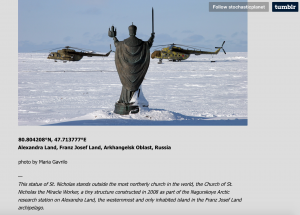
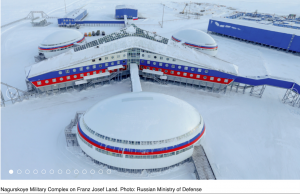
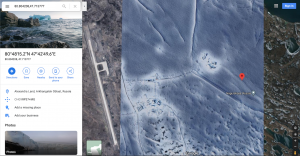
    After the text below, see three images, Top, Middle and Bottom, the top image showing a likely early indicator of Russian strategic military intent in the Arctic. *To see the images up close with clarity, right click and view images in new window.*

    As the U.S. was closing bases and not building icebreakers, the Russians were doing the opposite. Here is some helpful 2019 imagery of Russia’s strategic expansion in the Arctic making note of how expensive the Arctic expansion must be. Indeed, Russia clearly found the resources needed to leap ahead of the United States in the Arctic.

    Top Image: See below: The top photo is found on the Tumblr blog “Stochastic Planet” with a link to Russian scientist Maria Gavrilo’s defunct Panoramino site, showing a statue of St. Nicholas with a sword at a chapel built in 2008 for a “Research Station” according to her captured Panoramino comments, showing coordinates 80.804208°N, 47.713777°E Alexandra Land, Franz Josef Land, Arkhangelsk Oblast, Russia. Assuming Gavrilo was the photographer she snapped a photo of her military ride (two Russian military helicopters) with a chapel statue visible, two elements of Russian nationalism in Putin’s remaking of the quasi-imperial KGB-heavy autocracy. In 2008, the year the chapel and what Gavrilo calls the “research station” was built, President Putin ordered the invasion of Georgia, signaling Moscow’s increasingly aggressive military agenda. The site Gavrilo calls a “research station” had also been a Soviet military airfield built in the 1950s, now upgraded and operational.

    Dr. Gavrilo’s publications are largely on Arctic ecology, a necessary consideration given the Soviet history of polluting the Arctic and the need for biological understanding of the sustainability of an Arctic base for people. If the Arctic research was preparatory for building the base, not indicated by the Russian scientist in her photo (who by the way was part of international teams of scientists working in the Arctic) then planning began roughly 5-6 years before the start of the build-out.

    Dr. Gavrilo’s online presence indicates her participation in scientific research among colleagues from Arctic powers and NATO nations.

    Middle Image: See below: The middle photo is from the Russian Ministry of Defense, showing the same area after completion in 2017. Here a major Arctic military base was completed in less than 10 years from the first photo. The area was an old military airfield, now a Russian Air base. In forecasting what aircraft would likely be based there in the future, Russia has reportedly entered the R&D phase for producing the MIG-41, a long range interceptor to replace the MIG-31. Marine Corps Times: “According to Russian news reports, the MiG-41 will be equipped with stealth technology, reach a speed of Mach 4-4.3, carry anti-satellite missiles, and be able to perform tasks in Arctic and near-space environments.”

    It is possible the research referenced by the poster was purely scientific, but it was more likely in preparation for what was to come given her ride, the imagery, and the location of the research.

    Bottom Image: See below, the last image, Google Maps satellite image of the island area at the coordinates provided in Maria Gavrilo’s description from the top image.


  • Lai Xiaomin and China’s Anti-Democracy Narrative to the United States

    Lai Xiaomin and China’s Anti-Democracy Narrative to the United States

    With the execution of Lai Xiaomin of China Huarong Asset Management Co., China executed a subtle sword block and strike in the art of information war against the United States. Beijing’s leadership-level propaganda piggy-backs on decades’ long Russian intelligence narratives and memes marinating military, law enforcement, far right, and angry young men in the notion that only strongmen are free and manly enough to get things done because they can kill those perceived as ‘the problem.’ Stalin infamously said, “Death is the solution to all problems. No man – no problem.” It is no secret that Hitler felt the same way.

    Donald Trump praised China’s Xi Jinping, North Korea’s Kim Jong Un, and Saddam Hussein for their ability to deal roughly with opponents and troublemakers at home. Trump at least twice reportedly told Xi that building concentration camps for the Uighers was the right thing to do.

    The appeal of unbridled power in politics analogized to strongmen, action heroes, and military men, began with President Vladimir Putin’s PR-machine creating his own action-hero superstar status.  Putin, and to some extent, Ramzan Kadyrov then reached out to Hollywood action stars, boxers, and macho celebrities such as Steven Seagal (granted Russian citizenship), Oliver Stone, Italian Prime Minister Silvio Berlusconi, Mike Tyson, Gerard Depardieu, Roy Jones, Jr., Micky Rourke, Donald Trump, and Formula One’s Bernie Ecclestone, who advocated that Russian President Vladimir Putin lead Europe with this plug: “He does what he says he’s gonna do, he gets the job done.” This tough-guy narrative became a staple message about Donald Trump online, on whom followers imputed Putin’s macho image even if it was not warranted.

    China’s and Russia’s narratives that autocracies run by warrior leaders get things done while democracies run in place appealed to action heroes, elite military troops, and law enforcement types whose Facebook and other accounts as far back as 2009 trafficked in anti-Obama content comparing Putin’s military man status to conspiracy and racially-tinged meme-legends of Barack Obama as a liberal, civilian, Islamist conspirator unfit to protect the United States.

    For China and Russia, these narratives are not reserved only for those on the Far Right, but are pitched in different language to centrists and those on the Left. Consider the execution of Lai Xiaomin in the context of this excerpt from a propaganda piece (Google cache link) seen across Chinese English language media extolling China as an enlightened democracy compared with the West:

    The CPC has led the nation to unparalleled growth and staggering achievements, particularly in the reduction of poverty. It may be fairly described as a transformational miracle, bringing prosperity and optimism that were unimaginable a mere four decades ago.

    After five years of intensive reform, an unprecedented anti-corruption campaign, and the maturation of rule of law, a confident CPC, remaining true to its founding tenets, is set fair to keep the country on the right course “for a long time to come.”

    Again, the theme that autocracy ‘gets things done,’ includes China’s “anti-corruption campaign” in the name of which Lai Xiaomin was executed. Above, a euphemistic passage on socialist achievement dresses-up the lethal Stalinist animus underneath. No 8th Amendment. No rule of law. Just state terror with a shimmering exterior.

    I will close with an anecdotal illustration of China’s approach: On LinkedIn last year a purported, overtly mainland China profile popped-up and responded to my criticism of the chaos behavior of then President Trump, writing, and I paraphrase: “Time for a military coup.” How interesting, I thought back then, recalling a 2015 closely-framed photo from a Chinese-generated media site making Los Angeles protests over the Freddy Gray case appear more massive and out of control than they were.

  • Social Media Agitation Threat Assessment

    Social Media Agitation Threat Assessment

    Social media profiles posing as liberal Americans and or some highly agitated or provoked on the Left may begin advocating extreme narratives accusing all Trump rally attendees who remained within the bounds of lawful, permitted protest on January 6, 2021 of the suspected crimes of those breaching and burglarizing the Capitol Building, barriers, and assaulting Capitol Police Officers, journalists, and others. This would realize the cascading, repeating provocation and counter-provocation cycles purposed by active measures online.

    Imputing mass guilt by association without actual evidence in the name of liberalism not only fails due process, but would tend to aid recruitment from Trump’s law abiding base by far right extremists.

    Revenge communications, fear of revenge, and then angry acting out of the provoked fear is the psychological process at work that is in need of thwarting, intervention, and perhaps use of disclaimers.

  • Trump Incitement to Storm Capitol also Incitement to Storm Hospitals

    Trump Incitement to Storm Capitol also Incitement to Storm Hospitals

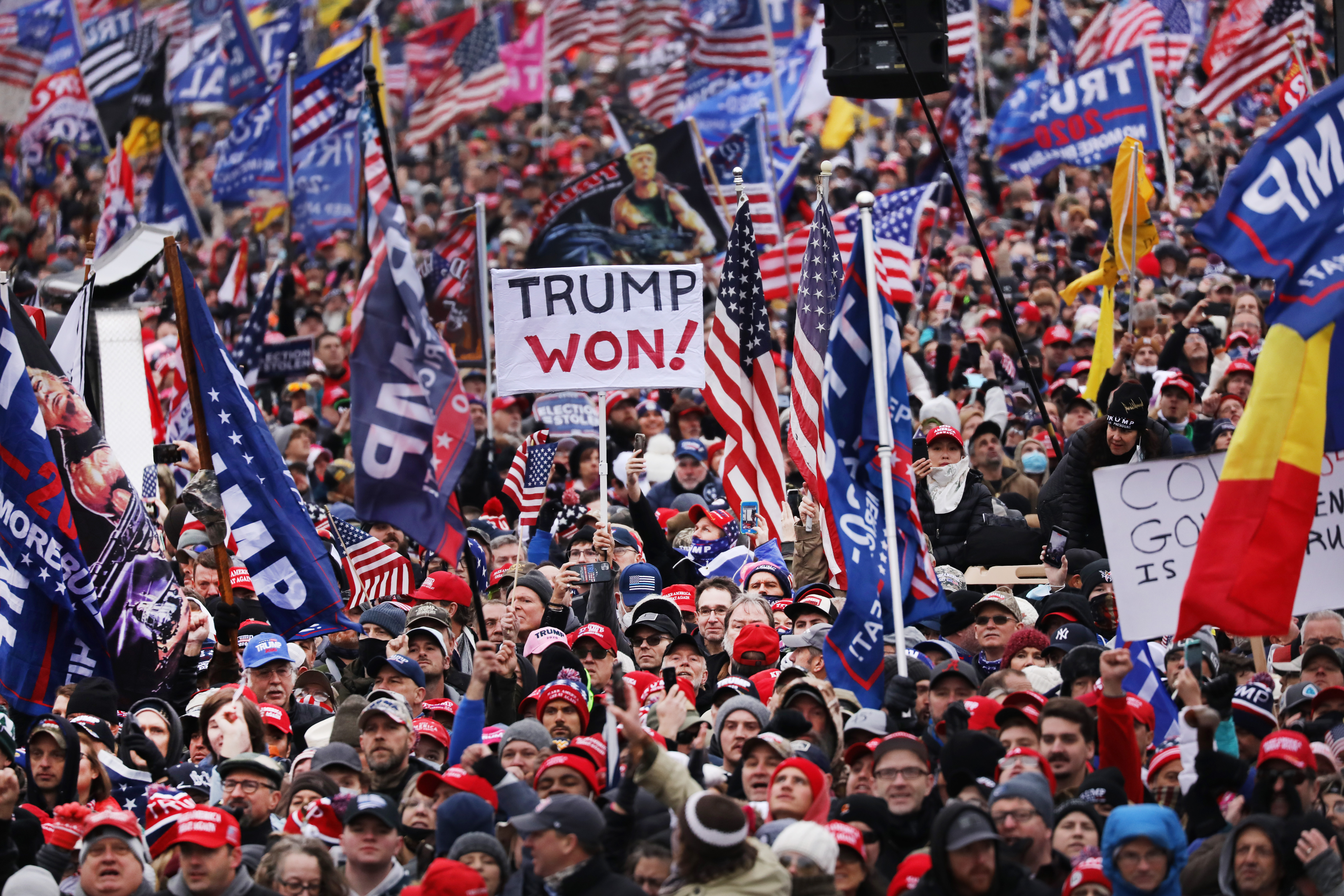
    Outgoing President Donald Trump’s mid-December call for a massive ‘stop the steal’ rally in Washington D.C. on January 6th was permitted for 30,000 people in the nation’s Capitol, revised up from 5,000 during a covid-19 pandemic with more contagious strains circulating the globe. There was a massive crowd turnout as indicated in photos below.

    The risk that January 6 would be a covid-19 super spreading event was clear, with Stanford researchers estimating that past Trump rallies combined were responsible for some 30,000 covid-19 cases and 700 deaths, with many not attending the rally infected by those at the rally.1 On January 6 estimates put the Capitol area rally at 30,000 people plus, with Trump supporters known to resist containment measures such as masks in the past.

    A review of some photos of the event suggests that social distancing was often not honored. Chanting, yelling, singing, breaching barriers, and fighting would create a pall of human exhalations and contacts. Those infected with covid-19 would have added to the total respiratory, fluid, and direct contact output. This was foreseeable by the President and his cabinet.

    The President pushed the rally knowing more transmissible covid19 strains were moving. By creating such a super spreader event the President would knowingly tax the governing, economic, and health care sectors across the country already struggling with spikes in covid-19 hospital admissions.

    Bernheim, B. Douglas, Nina Buchmann, Zach Freitas-Groff, and Sebastián Otero. “The Effects of Large Group Meetings on the Spread of COVID-19: The Case of Trump Rallies.” SSRN, December 18, 2020. https://papers.ssrn.com/sol3/papers.cfm?abstract_id=3722299.

  • The January Surprise: Delusion as Inability for Trump Removal Under 25th Amendment

    The January Surprise: Delusion as Inability for Trump Removal Under 25th Amendment

    Written Summer 2019, w/ Lead Updated for Post-MAGA Storming of the U.S. Capitol, Violence, & Casualties

    With doublespeak for which he is well known, President Trump on January 6, 2021 incited from among a mass of his supporters, certain fanatics, personality cultists, conspiracy theorists, and opportunistic extremist groups to storm the U.S. Capitol building with “strength” after having long used the words strong, or in the negative, weak, to describe those who do or don’t use force respectively to solve public problems or to get their way.

    Persistent delusions cannot be an “able” basis for the discharge of presidential powers and duties even if the ability to appear rational in any given setting exists. The bellwethers of delusion are not merely the appearance of confidence or hutzpah, but delusional decision-making and results. From that perspective, President Trump’s delusions of grandeur and paranoia are adversely affecting U.S. national security and constitutional checks and balances.

    Vice President Mike Pence and a majority of cabinet officers have the power and duty to remove President Donald Trump from office if the President is delusional to an extent he is “unable to discharge the powers and duties of his office,” under Amendment Twenty-Five, Section 4 of the U.S. Constitution.

    Delusion is inconsistent with access to the nuclear football, duties as Commander-in-Chief, judgment on foreign policy, and execution of laws. Before discussing evidence of the President’s delusions, consider Section 4.

    The Twenty-Fifth Amendment’s framers rejected restrictive modifiers on the word “unable” in Section 4 to prevent a future president’s unforeseen disability from evading a narrowed definition, according to Calvin Bellamy, in “Presidential Disability: The Twenty-Fifth Amendment Still An Untried Tool.” (Boston U. Public Int. Law Journal, Spring 2000).

    The open meaning of “unable” thus suits a ‘totality of the circumstances’ assessment of presidential inability not limited to medical findings. Bellamy noted in 2000 that external circumstances in disability assessments could include wars or national emergencies.

    External circumstances now include cyber attacks, political polarity, terrorism, hacks, evolving weapons races, and “grey zone” operations, multiplying the likelihood that persistent delusion is a presidential inability.

    Last century’s congressional explorations of presidential disability and the ratification of the Twenty-Fifth Amendment arose in the murky first decades of the Cold War after President Eisenhower’s 1955 heart attack and President Kennedy’s assassination. Much was at stake.

    Russia and China now wage a more sophisticated Cold War on the United States with new tools, access points, and advantages. The President’s own delusions have proven a target and vehicle of that war.

    Bellamy’s article, written soon after the Clinton impeachment also raised the disability risk of a president’s obsession with his impeachment, a growing risk for the combative Mr. Trump.

    Lawfare Blog’s Matthew Kahn wrote in September that Section 4 “could be used concurrently with an impeachment proceeding to keep an off-the-rails president out of office during a trial, for example.”

    While Section 4 was not intended to substitute for impeachment, it could preempt it if a president’s disability is adjudged by his cabinet and two-thirds of the Congress as permanent. Neither, if it failed, would impeachment be foregone.

    Two glaring examples of President Trump’s delusional thinking in office span foreign and domestic policy, and illustrate larger patterns in the President’s behavior giving force to Section 4 inability arguments.

    First, President Trump’s executive performance in his handling of North Korea, China, and South Korea fit into a larger pattern of delusion-based relations with adversaries, allies, fellow Americans, and even his own appointees.

    When the President declared the U.S. safe from North Korean attack after but one meeting with Kim Jong-un in Singapore last year, his delusions of grandeur were on full display. The meeting yielded vague, unverifiable words of intent but Mr. Trump’s confidence in them was as supreme as it was premature.

    On that basis Mr. Trump drew down full military exercises with South Korea, cracking the “maximum pressure” cylinder and crippling the hydraulics needed to leverage North Korea’s verifiable denuclearization.

    U.S. intelligence chiefs have since re-assessed North Korea as unwilling to denuclearize even as the President declared them wrong, and stated the opposite. That nuclear weapons development activities continue in the North has been widely and repeatedly reported.

    Mr. Trump’s grandiose optimism after the Singapore summit put North Korea (and likely China) in control of the Korean narrative, which turned to Korean reunification instead of denuclearization, non-proliferation, and an end to the Kim dynasty’s state terror.

    Moon Jae-In, South Korea’s North-sympathetic leader, took advantage of Mr. Trump’s grandiose confidence, posing for hand-holding photo-ops with Kim Jong-un at the DMZ reminiscent of emotional North Korean propaganda about reunification. This despite China’s military flights over South Korean islets, a “bad-cop” signal to the South Korean people as their President followed Mr. Trump’s lead in bolstering Kim Jong-un.

    Mr. Moon recently admonished the U.S. that it must take steps to match North Korea’s future denuclearization as if the parties were morally equivalent in the impasse. Mr. Trump’s erratic year in the rhetorical nuclear weeds with Kim Jong-un helped Mr. Moon’s sell that angle.

    Mr. Trump’s later statement that he and Kim Jong-un “fell in love” was delusional no matter how it was intended. It implied unseriousness about and or surrender to North Korea on issues such as Otto Warmbier’s demise, weapons development in the North, WMD proliferation, state terror, taking hostages for political leverage, hacking and totalitarianism. This undermined the U.S., allies, partners, and individuals violated by dictators’ 21st Century acts of state terror, such as Kim Jong-un sanctioning the murder of his half-brother Kim Jong-nam by nerve agent in a Malaysian airport. It also degraded international expectations for accountability where WMD and borderline agents are used by states to assassinate people with impunity.

    A reality-based Commander-in-Chief makes real alliances ever-stronger, but while President Trump claimed “maximum pressure” on North Korea he also pushed South Korea into common position with China, imposing tariffs on its imports to the U.S. and quibbling over the costs of joint ROK-US military exercises, as widely reported.

    Mr. Trump similarly pushed the Syrian Kurds, important U.S. allies on the ground in the Mideast toward the terror-sponsoring regime of Bashar al-Assad.

    After these events, Xi Jinping and Kim Jong-un, like Vladimir Putin, had to conclude that personal summits with Mr. Trump are highly desirable shopping opportunities.

    As Mr. Trump’s need for political victories increases, his vulnerability to Chinese and Russian leverage increases, for example, in that China can use Trump’s agricultural base as a targeted bargaining chip for a unified Korea firmly under Chinese control. That is a result of Mr. Trump conflating trade with national security policy so that each works as a counterforce to the other. Whereas, national security should be the first priority anchor on which fair trade deals can be firmly founded.

    Mr. Trump’s recurrent delusion making this possible is that South Korea and other allies deliberately “rip-off” the U.S. while dictators get good deals, so the U.S. may as well act like a dictator toward U.S. allies and find common ground with dictators.

    The tariff policy Mr. Trump has enthused about has had the predicted side-effects against allies, while hurting emerging nations the U.S. needs good relationships with for any hope to check China’s Belt and Road Initiative (mercantile expansion).

    Now Kim Jong-un seeks sanctions relief from Mr. Trump if Mr. Trump is to earn trust, and Mr. Trump has just granted that wish in addition to suspending US-South Korea joint military readiness exercises. All this has given Kim Jong-un more time to prepare his next moves.

    While Mr. Trump’s delusions of paranoia deceive him into thinking he is justified in treating allies shabbily, his grandiosity makes him believe he can do it without cost, and that dictators will honor their deals with him because they respect him. No, they will befriend America’s nonplussed allies.

    Kim Jong-un has not honored Mr. Trump’s Singapore memorandum. Mr. Putin violated, then claimed that the US violated first, the INF treaty. Yet because the President so depends on his perceived importance and he gains esteem from the autocrats’ communicated respect, Mr. Trump tries to please them the more with concessions.

    That is one probable reason that Mr. Trump renews his threats to leave NATO, rationalized by his “rip-off” delusion toward fellow NATO allies. The threat to abandon NATO allies follows Mr. Trump’s pattern of susceptibility to the disinformation and praise from his imagined friends in Moscow, Beijing, and Pyongyang that feed his grandiosity.

    For example, in 2017 Mr. Trump declared that Xi Jinping had taught him the history of the Koreas as once part of China, angering South Koreans. He also repeated Moscow’s agitprop that NATO is obsolete, and recently related Mr. Putin’s legend that the USSR’s war in Afghanistan was a counter-terror operation. It was a KGB-run assassination and coup.

    Mr. Trump’s photo-op and presser with Vladimir Putin in Helsinki confirmed his reverent subordination and submission to Mr. Putin’s assertions even as he played tough with his own subordinates. This implied a pecking order with Putin on top as most trustworthy, and Mr. Trump’s American subordinates below. This is a major psyop achievement by Moscow.

    Only under a strong delusion could an American elected to the U.S. Presidency lend aid and comfort to dictators after having sworn: “I do solemnly swear (or affirm) that I will faithfully execute the office of president of the United States, and will to the best of my ability, preserve, protect and defend the Constitution of the United States.”

    Foreign policy is not the only victim of the President’s delusions. Mr. Trump, while the 2018 California wildfires were still burning, tweeted disinformation that they were caused by state forest mismanagement.

    California firefighter unions and local officials promptly corrected Mr. Trump, stating that the wildfires were brush fires irrelevant to forest management and that most California forests are under federal management anyway.

    The delusion temporarily put out by firefighters ignited again in January as the President, on the same basis threatened to deny FEMA disaster relief funds for California as its communities mourned scores of dead, thousands of lost homes, and blackened landscapes.

    As with his suspicion of allies, the President nurtures a deluded premise that California was somehow trying to rip-off the federal taxpayer by asking for FEMA disaster relief funds.

    Mr. Trump’s delusions of grandeur and paranoia complete a self-feeding loop leaving him in his own mind as ‘one man’ who can run the U.S. the right way; who sees himself as a “pretty good general;” who ‘sacrifices’ to stay at the White House during a government shutdown he created that wasted twice as much as the funds he sought for border wall and hurt government morale.

    Mr. Trump’s paranoid delusions make the Presidency a behavioral funnel toward dictatorship as his delusions isolate him, and his isolation deludes him more. This increases his need, and susceptibility to outside help.

    It does not matter why Mr. Trump acts this way, it is disablingly delusional regarding his presidential powers, duties, and oath. It matters little if the President gets a lot done in a flurry of executive decisions and deals if those ultimately serve dictatorships, not the defense of the U.S. Constitution and the people it protects.

    Mr. Trump’s delusions are also driving the U.S. toward a costly, divisive impeachment battle. Given Moscow’s political war to divide Americans and scorch the rule of law, an impeachment war between the GOP and Democrats is the first priority for Mr. Putin, while a divisive 2020 election is his second choice.

    A Twenty-Fifth Amendment Section 4 removal could be just the cure the nation needs to stay free. If Mr. Trump’s appointees find that the President is disabled by delusion, it is one step removed from his own admission, for he appointed them. This showed-up after the Helsinki summit as Mr. Trump had to read from a written statement that he hadn’t meant it when he said he “didn’t know why it would be” Russia running election-interference operations against the U.S. in 2016.

    Much depends on Mike Pence and the majority of cabinet members who have pretended to go along with the delusions thinking they could put out the fires. However, new summits with Kim Jong-un and Xi Jinping approach. What will he give away in his trust for these dictators?

    Do the Vice-President and the majority of Trump cabinet officers have the courage to uphold their oaths to defend the Constitution from foreign enemy leverage over the President’s delusions? If so, Moscow’s leverage in Washington D.C. would dissipate.

    A Section 4 solution requires that all cease positive or negative co-dependence on a president who is clearly not well, and who claims credit for everything that goes well in his bouts of grandeur.

    Nothing says that evidence in the Mueller report, FBI files, Congressional files, and from open sources such as the President’s twitter account could not be used to illustrate how the President’s delusions make him unable to discharge the powers and duties assigned him by the U.S. Constitution.

    While Bellamy’s research found vice-presidents and cabinet members reluctant to invoke presidential succession when disability issues arose for Presidents James Garfield, Woodrow Wilson, and Ronald Reagan, the reluctance stemmed from disabilities beyond those presidents’ control from which they would either recover or not: gunshot injuries and a stroke. Mr. Trump’s presidential disability is more insidious in that he appears functional on the surface, but his disability risks ultimate decisional error beyond the point of no return.

    Mr. Trump’s disablement is mental in the context of the Presidency, even if he may be deemed functional as a real estate man and show business personality. His delusional impulses, tweets, and related impulsive behaviors cause ongoing dysfunction in the executive branch and thwart cabinet members’ attempts to cure the effects of his delusional, impulsive decision making.

    Who can deny the writing on the 25th Amendment wall reportedly left by President Trump’s current and departed cabinet officers? Words and phrases include: “erratic behavior,” “acceptance of alternate realities,” “crisis of integrity,” “engages in repetitive rants,” “impulsiveness results in half-baked, ill-informed and occasionally reckless decisions,” and “not moored to any discernible first principles that guide his decision making.”

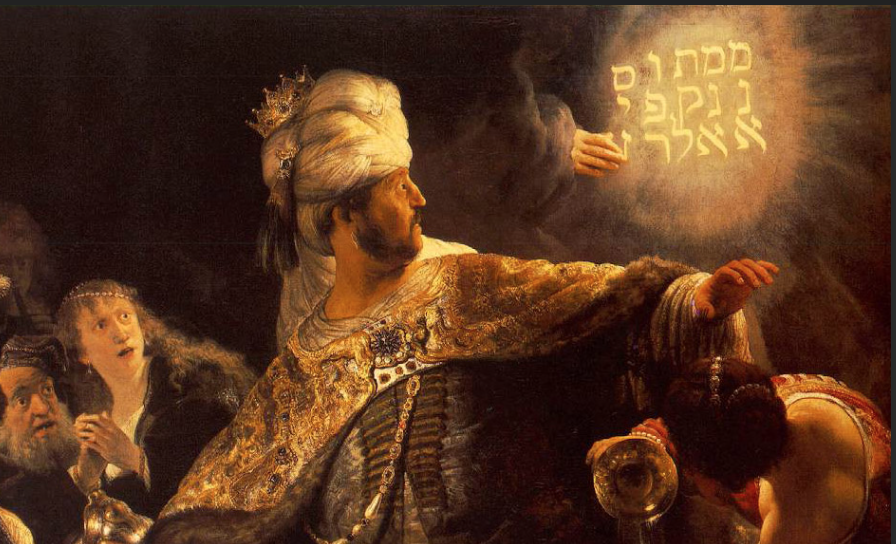
    If the writing materialized on the wall for the ancient Belshazzar, it glows on the Washington Monument today, a monument of unity and high ideals now in the shadow of a delusional man who does not know himself, or his true enemies. In the words of Sun Tzu:

    “If you know the enemy and know yourself, you need not fear the result of a hundred battles. If you know yourself but not the enemy, for every victory gained you will also suffer a defeat. If you know neither the enemy nor yourself, you will succumb in every battle.”

  • Massive Hack: First Thoughts and Caveats

    Massive Hack: First Thoughts and Caveats

    Soon after Vladimir Putin’s rise to power, he pushed for a walled-off “Russian internet” which was a strategic shot fired across our bow. Russian operations since would turn global internet-dependent nations and entities into a constellation of sieves to reverse the internet security advantage in favor of the “Russian internet,” if such was attainable.

    Hackers have reportedly breached U.S. government and private enterprise systems using malicious code embedded in a SolarWinds software security update earlier this year and established themselves in U.S. government and sensitive private enterprise computer networks for several months, and maybe longer. The software supply chain was compromised. Not surprisingly, Russian state hackers are the main suspect.

    There could not come a worse time for the nation’s security with the lame duck administration with hundreds of pre-2016 Russian state friendly connections having asserted loyalist control over varied agencies. Whether there are insiders planted by that Administration to enable this hack within one or more departments or agencies remains to be seen.

    On LinkedIn, some profiles in software DevSecOps recently promoted within the government have signaled loyalty to persons and not national security by coming out swinging for the false election fraud allegations even after courts across the nation had dismissed the majority of cases. Nothing screams loyalist as one willing to posture irrationally and fall on their letter openers for a leader acting ultra vires of his or her oath.

    If follow-on exploits, installations, and backdoors were created after the SolarWinds security update established the initial access, a question arises of whether Moscow is also spying on the processes used to ‘secure’ the networks, do damage assessment, and investigate leads. Whether or not exfiltration or theft reached the most sensitive material, is Moscow monitoring the post-hack investigation and security measures in real time? Can its hackers or AI available to them, take clues from the post-hack response to learn what we deem sensitive material?  That is, if they had not already cracked-into it?

    Or if there is another Edward Snowden insider, are these questions moot? Don’t assume so.

    Whatever the case, it is hopeful that our cybersecurity responses are not giving the Russians a tour they did not or could not yet take. Don’t show them patterns of concern.

    Indeed, wall-off networks altogether if possible, and establish alternate methods for getting departmental business done while the analysis is done.

    Putin sought a “Russian internet” for fear of this very kind of breach. Except now he’s inflicting some level of his feared outcomes on the United States while Donald Trump languishes in office, a double-tap against U.S. security.

    Were counter-response plans to such a hack known in advance?

    Whatever the actual U.S. response, respect is due the Russian side. Let us show that respect by upping our game, and by not following predictable, likely compromised routines and responses. Or thumb-sucking infighting. This is a time to work from scratch even as we assess what Moscow has actually attained, what can be done with it, and what their intentions so far appear to be. Let us also locate the insiders and remove them from the game board.

  • US-Self-Sabotage: Energy Policy and Nord Stream 2

    US-Self-Sabotage: Energy Policy and Nord Stream 2

    Bloomberg reports that Nord Stream 2 is again underway at a clip, with Russia pushing forward and Germany trying to proof the project against the Trump-led U.S. sanctions against our German NATO ally, friend, and fellow democracy.

    In 2014, Representative John Boehner and others argued that fast-tracked, increased U.S. LNG exports abroad would free global supplies nearer to Europe to relieve Europe (Germany, Ukraine and others) of a Russian gas supply monopoly on Putin’s terms. With Russia building the Nord Stream, its history of shutting-off gas supplies on sudden changes in terms bodes ill for Germany.

    Russia’s history of changing terms of energy partnerships illustrates the risks against which Boehner and others wanted to protect U.S. allies. Rather than get behind a competitive approach to helping free Europe this way, the Trump Administration adopted a sanctions policy against Germany that would drive Germany into Russian arms regarding the Nord Stream 2. This advantaged Russia by making the U.S. the bad guy, with Russian information warfare pushing narratives to that effect.

    Germany’s response to these cross-cutting pressures has been to boost clean energy’s share of national supply to reduce dependence on fossil fuels, efficiently addressing energy independence and responsible climate-balancing policy at once. Rather than join and support Germany accordingly, the Trump Administration has instead used blunt rhetoric tying climate change and renewables to “socialism,” tending to undercut Germany’s efforts to reduce Russian pressure on its economy.

    The problem is that Germany remains dependent for natural gas products to warm its people during hard winters. The U.S. could have been doing more from 2016-2018 to help Germany with fast-tracked efforts to build pipelines getting LNG and other products to global markets since President Obama lifted the U.S. oil export ban, but pipeline steel suppliers among U.S. democratic trade partners were hit with U.S. steel tariffs. This delayed pipeline projects in the Southwestern U.S. through 2018, followed by an increase in capacity between 2019-2020 as tariffs abated (see principal Graphic).

  • China Update: Seizing Advantage from Strategic Lame Duck

    China Update: Seizing Advantage from Strategic Lame Duck

    Bloomberg reported that Iraq is prepared to enter a multi-billion dollar energy deal with China similar to that China made with Russia several years ago that culminated in the Siberian pipeline to China. These prepaid oil for financing deals are tools China uses to decouple its energy needs from U.S. domestic sources while gaining influence over emerging nations adverse to the U.S. and democracy’s allies.

    China’s deal with Iraq would not burden Iraq with interest on the financing, but would impose opportunity cost as to the supplies spoken for if prices otherwise went-up. And this makes one wonder if China is expecting prices to rise with possible unrest or war in the Middle East. Vaccine-related recovery would be enough reason to expect oil prices to rise, but Iraq’s increasing ties to Iran and Iran’s uranium enrichment, together with other rivalries, raises the war risk.

    Whatever the energy price factors, the Beijing’s no-interest financing deal with Iraq looks less economic, and more like a pretext for military deployment to the fertile crescent to protect “vital national interests” with enhanced strategic control over Middle East oil and gas supplies. In seizing leverage over desperate OPEC+ players with massive proven global oil and gas reserves such as Russia, Iran, Iraq, and Venezuela, China establishes a “vital interests” argument for military expansion. The Trump Administration policy of keeping oil and gas cheap helped create the desperation in OPEC+ members that opened the door to Chinese expansion.

    Few if any working at U.S. foreign policy in Iraq over the past thirty years would say that the aim of it all was to prepare Iraq to take on China as a long term creditor with negotiating leverage to go with it, while Russian sovereign energy companies take more contracts for development, transport, and processing of oil and gas.

    One can say this is where isolationism leads, true. But that is secondary to the whipsawing partisan and autocratic political warfare inciting internal U.S. political divisions making U.S. foreign policy too bi-polar to prevail over autocratic foreign policies with continuity over time. Which brings us back to the need for unifying, not divisive, leadership in the United States if we are to compete successfully in world markets to help keep future generations of Americans independent.

    War history indicates that aggrandized energy supplies are crucial elements of war power, so that supplies through contiguous friendly lands increases energy security for the power which can achieve it. Such supplies are easier to defend closer to home. Iraq and Iran would be contiguous energy pipeline candidates if Afghanistan came under China’s influence. Will Afghanistan be China’s next Belt and Road Initiative debtor target should the United States drop-out of a supporting role?

    As China and Russia move into financial and energy patrimonies across OPEC and other lands, their strategic oil and gas supply gains will be one more instrument of power supporting both China’s and Russia’s militaries.

    The company selected for final bid authorization? ZheHua. Per Bloomberg, a brief description is instructive:

    “ZhenHua produces and trades oil. The company has played a large role in Beijing’s so-called “going global” policy for energy. It has invested in oil concessions in the United Arab Emirates, Kazakhstan and Myanmar, and trades crude originating from the likes of Kuwait, Brazil and the Republic of Congo. The company was founded in 2003 as a subsidiary of the largest Chinese state-owned defense contractor, known as Norinco. According to its website, ZhenHua trades about 1.3 million barrels a day of oil and finished products.”

    Sustainable and adaptive U.S. foreign, energy, trade, defense, and security policy recommendations are due for an upgrade, much of the creation and vetting of which should be offline topics.