Blog

  • Putin Uses Pride & Fear to Coerce Continents of People

    Putin Uses Pride & Fear to Coerce Continents of People

    Current Issue

    Friday, President Vladimir Putin boasted that Russia did not need to use nuclear weapons to conquer Ukraine. Pride. And today, Reuters reported new references to Russia’s possible use of tactical nuclear weapons from the Russian MOD and Spokesperson Dmitri Peskov. Fear. This is more of Putin’s pattern of untrustworthy, contradictory communications seeking arbitrary control over the course of hundreds of millions of people across continents.

    Per Reuters:

    “In the first stage of the drills, Russian troops trained how to arm and deploy Iskander missiles, while the air force trained how to arm Kinzhal hypersonic missiles.

    The second stage, announced on Tuesday, involved working out joint training of Russian and Belarusian units “for the combat use of non-strategic nuclear weapons”, the defence ministry said.

    “The situation on the European continent is quite tense, which is provoked every day by new decisions and actions of European capitals hostile to Russia, and above all by Washington,” Kremlin spokesman Dmitry Peskov said when asked about the drills.

    “Therefore, of course, such exercises and maintaining combat readiness are very important for us.”

    https://www.reuters.com/world/europe/russia-belarus-start-second-stage-tactical-nuclear-drills-ministry-says-2024-06-11/

    Putin’s Imperialist Telegraphs

    After the chaos of the 1990s, Putin took over after Yeltsin’s orchestrated resignation and announced New Years Eve 1999 that the 21st Century would be the new “Russian Century,” not the ‘multi-polar century’ as he later termed it to cover up his actual intentions. The new Russian Century rhetoric smacked of imperialism and he wanted to deliver that emotional security blanket to Russians because it is what he meant, but he walked it back internationally with a forked tongue.

    In its June 16, 2022 piece “From Accepting NATO Aspirations to ‘Denazifying’: 20+ Years of Putin’s Changing Views on Ukraine,” a staff editorial at Russia Matters by the Harvard Belfer Center noted another glimmer of Putin’s underlying imperial mindset that plays at openness and harmony with Europe but rests on imperial plans. Referring to Europe, Putin said, “If they push us away, then we will be forced to find allies and reinforce ourselves. What else can we do?” (Quote Source: Nataliya Gevorkyan, Natalya Timakova, and Andrei Kolesnikov’s “First Person: An Astonishingly Frank Self-Portrait by Russia’s President Vladimir Putin,” in Public Affairs, 2000).

    In another quote taken by the Russia Matters editors as a statement of Putin’s then-openness: “Of course, Russia is a very diverse country, but we are part of Western European culture,” Putin said in 2000. “No matter where our people live, in the Far East or in the south, we are Europeans.” At the time, after observing the flash of dramatic imperial self-signaling surrounding Putin’s assumption of Yeltsin’s seat before his term ended, the above quotes could be interpreted as Putin’s rhetoric of stealth revanchism regarding Eastern European countries claimed by Stalin as Russian satellites from Hitler’s spoils.

    Arguments

    Eastern Europe did not attack Putin, the Nazi dictatorship did. And neither Ukraine, the E.U., NATO or any other country attacked Russia post-USSR. Despite this, Putin’s uncompromising assertion of control over far broader landmasses than Moscow can effectively lead is a repeat dictatorial failure that the Soviets proved was futile. All this, to the disservice of Russians, neighboring states, and the world as the opportunity costs tick away to tackle global problems affecting the world’s hundreds of other sovereign countries.

    While constant NATO membership growth may be the right of every independent country surrounding Russia, it presents a cart and horse conundrum in that such countries have memory of Russian invasion, incursion, destabilization, atrocities, and rule over time and need collective protection from same. However, Russia has a big country’s fear of balancing peer powers’ presence at its borders.

    And yet China is at Russia’s border and Putin allies with Xi because one dictator’s rule tends to justify another’s, indicating that this was never about NATO or Russians’ well being but Putin’s imperial perks. In addition, China has fought border war with Russia whereas NATO and nearly all European nations since the end of WW1 have not aggressed against Russia. Also, NATO is a mutual defense treaty, not a poly-mutual aggression treaty.

    Concluding Thoughts

    What is the strategic solution? Deterrence by alliance is logical as both Russia and its neighbors can freely choose theirs — however, the balance of power requires denuclearization of border areas to avert first strike threats with nuclear missiles.

    Yet it was easier to achieve deterrence and nuclear detente with the Soviets that experienced their own system in a more humble economic light by the 1980s than it has been with Putin who is unreliable, emotional, and has sought destabilizing advantage by putting tactical nuclear arms in Belarus. The tactical designation is folly in that tactical nuclear arms can also escalate to the next level.

    No Soviet leader ever used tactical nuclear arms in combat during the Cold War given Mutually Assured Destruction risks. Putin’s escalate to de-escalate policy is not an improvement on the Soviet Union’s policy, but a regression below it, which is like saying that going lower than hell makes hell ordinary, and purgatory look like a vacation resort.

    If Putin’s gamble to hold Ukraine has been a dictatorship’s bad judgement, how much more so his decision to threaten tactical nuclear warfare? And that not for defense, but to expand outward to lands the USSR could not effectively govern without genocidal and grossly negligent, even intentionally negligent handling of disasters there? Indeed, Putin has caused disaster in Ukraine during this war, and threatens more.

    Such is Russian dictatorship under yesterday’s hardliner KGB retirees.

  • Russia’s and China’s Irregular Warfare Against Israel, Israelis, and Palestinians

    Russia’s and China’s Irregular Warfare Against Israel, Israelis, and Palestinians

    Introduction

    Jonathan Winer’s must-read report for the Middle East Institute last November chronicled and discussed circumstantial evidence of timing, communications, training, modes of operation, financial, and weapons support by Russia for Hamas and for Iran, Hamas’s chief sponsor before and after the terror organization’s October 7, 2023 terror war on Israel. This, provoking a predictable Israeli defensive-offense campaign against Hamas no matter where it or its agents fled, with related collateral civilian deaths and damage.

    Argument

    Anyone who did not think Israel would respond with extreme vigilance to eliminate Hamas and mop-up its remnants has not been monitoring the history of Israel and Palestinian conflict. Yet it is certain that President Vladimir Putin and those in his elite silovarchy and in China’s power complex who participated in aid and encouragement to the Iran-Syria-Hezbollah-IRGC-PIJ-Hamas terror complex have monitored the history of Israel and Palestine.

    Thus, Putin and Xi could predict what Israel would do if Hamas was equipped, trained, and informed to attack Israel on a larger scale than ever before; and predict the geopolitical benefits to Putin’s and Xi’s regimes. Such knowledge in the Kremlin and Beijing includes that of likely heavy collateral damage against Palestinians subject to Hamas and its agents using them as coerced accessories after the fact, human shields, and propaganda props after Hamas’s latest terror campaign had begun.

    After the surprise attack, as the Hamas charter’s and Israel’s Likud Party platform words “from the river to the sea,” agitated fear and hostility as Russia and China fanned the flames in the information space. On international agitation benefitting Russia and China after the attack, the Jerusalem Post cited the Network Contagion Research Institute (NCRI) finding that “convenors of the Shut it Down For Palestine coalition, Answer Coalition, The People’s Forum, and the International Peoples’ Assembly are linked by a complicated web of financial, personal, personnel, and ideological ties to CCP associates Neville Roy Singham and his wife Jodie Evans, according to NCRI.”

    The two major terror war assaults on Israel by Hamas, its sponsors, and co-proxies in Lebanon and Syria have involved large numbers of imported rockets, missiles, and or components from and through Iran. Yet nothing rivals the scale of warfare and the volume of munitions of October 7th, 2023.

    Iran’s elevation by China and Russia as a rising military industrial power in axis with the military objectives of the alpha dictatorships was an existential threat trend that Israel could not miss, ramping-up the intensity of its urgency to eliminate terrorist aggressors in and adjacent to its borders. Winer accurately identified how Russia benefits from the diversion of Western aid from Ukraine to Israel. And China’s interest in Russia’s success in Ukraine goes to Beijing’s desire for Taiwan.

    The question addressed here is how, if at all, the evidence Winer and others cite about the Russian connections to the Hamas terror war on Israel fits known Russian irregular warfare behaviors.

    In “Divide and rule: ten lessons about Russian political influence activities in Europe,” Geir Hågen Karlsen writes that, “Russia is targeting the West through a divide and rule approach, using multiple tools of influence. The population is mainly reached through media and social media, exploiting divisive issues. Minorities, refugees, and extremists are used to further this divide and rule approach.” True to the methods and useful proxies specified in Karlsen’s report on Russian subversive methods in Europe, Hamas is not only designated as an extremist group, Palestinian refugees sympathetic to Hamas leadership, and global minority groups that feel headwinds where they live can emotionally and erroneously conflate Hamas with Palestinian state solutions. These unwitting and witting proxies are prime targets for Russian political influence divisors, whether diplomacy, HUMINT influencers, promoted personalities, slogans, memes, ideas, viral videos, speeches, and or more.

    Russia, it has been widely reported since invading Ukraine in 2022 has escalated from mental and emotional influence to global coercion, equipping, and partnership in militant sabotage operations. Whether by covert Russian private military companies, GRU, FSB, SVR, or all of the above, with regard to Hamas, Russia’s use of Iran and Iranian regional proxies surrounding Israel (Syria, Lebanon) was likely its primary conduit of aid and encouragement of Hamas.

    Direct Russian involvement in equipping, providing intelligence for, facilitation for, arming, and joining in attacks covertly cannot be ruled-out given Russia’s open, conventional warfare and expanding imperial militarism across Africa, Latin America, and the Mideast.

    Two weeks after the Hamas attack as Israel’s response geared-up, Reuters reported that a Hamas delegation visited Moscow to talk about hostage negotiations, and that:

    Hamas released its own statement in which it praised the efforts of Russia’s President Vladimir Putin and foreign ministry to end what it called “the crimes of Israel that are supported by the West”, according to Russia’s RIA news agency.

    and more evidence of the strategic propaganda motives:

    Russia has ties to all key players in the Middle East, including Israel, Iran, the Palestinian Authority and Hamas, the militant Islamist group that controls Gaza.

    Moscow has repeatedly blamed the current crisis on the failure of U.S. diplomacy, and called for a ceasefire between Israel and Hamas and the resumption of talks aimed at finding a peace settlement.

    Finally, Hamas’s praise for Russia, an early Russian-born hostage release, and the role of a longtime Russian envoy practically embedded with Hamas, Deputy Foreign Minister Mikhail Bogdanov, suggests that the Russian hostages may have been taken as friendlies to give Russia deniability and propaganda props for involvement in the Hamas terror war of 2023.

    Conclusion with Free Nation Policy Considerations

    The role of, and benefit to Russia and China in aiding and encouraging the Hamas attack on Israel knowing of the predictable Israeli responses call for a new policy among free nations to seize and repurpose all nation state and private military assets in the Middle East and Africa that have sponsored or fomented free or emerging government destabilization, insurgency, terror, war crimes, and humanitarian crises. Assets that cannot or will not be subject to seizure should be subject to retirement as free nations may define it.

    Free nations should form a new international organization of free nations and observer nations to replace the U.N. while repurposing U.N. HQ and monetary support for the new organization. Some portions of the UN that foster open deescalation communications, humanitarian, and disaster cooperation among all nations could remain in place.

    NGOs should not be allowed to privately lobby the new freedom nations organization, however, should be legally required to appear before the organization to issue overt, public communications about their activities for freedom. Their influence should be overt, express, and subject to the organization’s membership adoption of all, part, or none of the NGOs’ recommendations.

    The new free nations organization should have its own security and economy councils with eligibility requirements favoring proven, stable free nation status for a term. Observer nations interested in becoming constitutional republican democracies with basic bills of rights who verifiably implement same for a sound term could earn eligibility to become a voting member of the new organization and become eligible to eventually join security or economy councils.

    Feature Image

    Ecrusized, influenced by user Rr016. – Own work, Israeli military presence in Gaza Strip citing Institute for the Study of War & Critical Threats Project. Maximum Palestinian advance citing NYT & WSJ. Made using OpenTopoMap data.

    • CC BY-SA 4.0
    • File:October 2023 Gaza−Israel conflict.svg
    • Created: 8 October 2023
    • Uploaded: 1 June 2024
  • Policymaker Pitch: Strategy of Attrition Will Backfire on the United States – Biden Administration Must Be Bold for Ukraine Now

    The United States’ piecemeal weapons micromanagement of Ukrainian defense (no ATACMS against Russian military and military logistics inside Russia) suggests to allies that the goal is to weaken Russia via attrition, not expedite victory for Ukraine. Russia’s leadership does not care about attrition so long as they ultimately rule the ruins, secure them with nuclear weapons threats, and use China to help rearm, rebuild, recover, and eventually, do it again.

    Also, an attrition-weakened Russia and Ukraine will both become destabilized, increasing chances that surviving warlords will fight for the nuclear crown. Who in the West could then occupy and keep the peace in Ukraine and Russia after cynically subjecting both sides to dissolution via attrition? It is unrealistic to treat human beings with memory the way we would not want to be treated and expect them to share a bond with us tomorrow.

    If American campaign promises that the U.S. will honor steadfastness in our treaty and non-treaty alliances is to be real and remembered fondly in a free future, an attritional approach to Ukraine’s defense will not actualize it.

    Attrition is agreeing to fight on Moscow’s terms which believes in realism over reality. Realism is the autocrat’s way of gaining mental acquiescence in its opponent leadership circles with the idea that the most evil, ruthless, and uncompromising ruler and his actions are “the realism” all must give into via negotiated compromise. Reality is what sets in too late when the dictators break their negotiated promises and false compromises, attacking again.

    Putin will attrit Russians shamelessly and use Chinese backing to keep long range missiles flying into Ukraine even as Ukraine cannot do the same against military targets due to American micromanagement. There is no way to keep Ukraine or the other countries that will fall if Ukraine loses the war out of Russian and Chinese hands if attrition is the strategy. Why?

    If Ukraine is broken by all-range bombardment as Chechnya was, Russia will install the corrupt and brutal proxies they want to rule Ukraine’s ruins, financed by Moscow and Beijing, and secure Ukraine like Belarus: with forward nuclear weapons trained on Europe’s capitols and treasures.

    The dictators will then send the brainwashed children of Ukrainians that they removed to Russia in the course of the war of attrition and infiltrate Ukraine’s traumatized remnants with future generations that entrench false histories about Russian aggression against Ukraine. These will include a sad and foolish kernel of truth: that the United States was willing to see Ukrainians and Russians attrited while freedom and dignity of freedom nationhood died in Ukraine.

    Counterintuitively, standing by Ukraine and showing character, courage, and strength in free nation leadership is ultimately respected by dictators such that they would rather be beaten by same than be dominated by another backstabbing dictator. For the latter will be the eventual contest should the free world go under this century.

    However, if Russia’s conventional warring capabilities are skillfully defeated without unnecessary delay, attrition stops, and the Russians see no Western free nation invasion, the argument for getting into a nuclear war falls flat at home. It fell flat for the Soviets after the Berlin Wall fell and once free republics sought freedom from the Soviet empire. If it had not, nuclear war would have happened then to preserve the USSR. Russians may be deceived for some time, but not forever, and especially not all of those wise enough to govern.

    What about China? China does not want the nuclear genie to step out of its bottle in Eurasia because it ruins many of China’s Belt and Road plans economically necessary to keep China together under Beijing’s rule; and it increases chances that nuclear arms will be used in other conflicts, some of which are frozen in place yet thawing around the Middle Kingdom.

    Finally, the United States fighting on two major fronts is not the superpower the world is looking for if history is any guide. The difference in the 20th Century American valuation of human life came by experience moving to the center away from the extremes of 19th Century frontier libertarian atavism and the fanatical utopian assault on the globe by imperial, totalitarian dictatorships with 20th Century war machines. The genocidal, self-destructive tendencies of such extremes made the United States take their Constitutional freedoms and liberties more seriously in application at home and abroad.

    Since America’s 20th Century governing evolution, the big difference between the domestic governance of the U.S. constitutional freedom nation and dictatorships or warlord-run nations is that free nations have something to live and fight for beyond fighting for fighting’s sake, making life on Earth more valuable. Unfree peoples tend to march forward under their dictator’s parasitic, alpha stare to their deaths because their dear leader culture tells them there is nothing to live for beyond the ruler’s will in this world, and that God rewards slavish obedience to the ruler.

    The late Yevgeny Prigozhin served his dear leader with that narrative, recruiting Russians to kill fellow slavs in Ukraine with the assurance that “life is overrated.” Surely Prigozhin’s dear leader thought Prigozhin’s life was overrated only after Prigozhin realized that his comrades’ lives were as important as those of Putin’s elites and Yevgeny began to “Question More.”

  • Will Russia Try to Commandeer One of Georgia’s Black Sea Ports?

    Will Russia Try to Commandeer One of Georgia’s Black Sea Ports?

    Port Hunting Likely If Russia Fails to Co-opt Georgia

    Russia has spent a pot of oil and gas profits to promote members of Georgia’s ‘Dream Party’ who would make Georgia Moscow’s satellite, stepping up efforts in 2024 to pass a foreign agent law outlawing NGOs with 20% or more of their funding from abroad, including those advocating for basic civil liberties and support for Ukraine. Georgia’s parliament just passed the Moscow-approved foreign agent law, and Georgia’s executive maintains horse-blinder neutrality regarding Putin’s attempt to sanitize (genocidal reference with precedent) Ukraine.

    A 2021 CSIS report outlined Moscow’s asymmetric measures to divide, isolate, and control Georgians through groomed politicians moving into positions of authority touting policies that information warfare repetition has sought to popularize:

    Georgia’s anti-Kremlin and pro-Western sentiments led the Kremlin to review its strategy and mobilize hybrid tools (that) have three main goals: (1) to discredit the West in the opinion of the Georgian public and reverse the European and Euro-Atlantic agenda; (2) to weaken Georgia from within by using radical nationalist and pro-Kremlin groups; and (3) to portray Georgia as a “basket of problems” that cannot bring any value to the West.

    Consistent with the CSIS report, by adhering to Moscow’s foreign guidances that it would purport to outlaw for all other nations, the Georgian Dream Party’s parliamentary majority passed of the Putin-inspired foreign agent law.

    There have been reward points from Moscow to put the Georgian Dream Party’s policies in a more positive light, such as:

    (1) Moscow’s grant of Visa free travel and end of flight restrictions for Georgians to and from Russia a year ago; and

    (2) China’s extension this week of visa-free travel to Georgians, backing up Moscow’s inducement and countering U.S. Secretary of State Anthony Blinken’s promised visa restrictions for Georgians who undercut freedom of speech in Georgia.

    All this despite last year’s April and December 2023 polls indicating a majority of Georgians favor EU membership, European culture, and basic individual freedoms that help check the dismal history of autocratic corruption. The Wall Street Journal reported that ‘more than 80% of Georgians favor joining the EU and there is deep suspicion of Russia due to the 2008 war.’

    Tens and perhaps hundreds of thousands of Georgians have marched and protested for over a month against the foreign agent law before Georgian President Salome Zourabichvili vetoed it last week. Georgian Dream Party’s speaker of parliament, Shalva Papuashvili said MPs would be able to overturn her veto, prompting thousands more to protest his party’s expressed intention. The Parliament did overturn President Sourbichvili’s veto and the foreign agent bill became law.

    By Georgians’ protest turnout and in polls, the great majority of Georgians want E.U. membership for Georgia and oppose a government that does Moscow’s will. That will make it harder for Moscow to co-opt Tbilisi.

    When Ukrainians revolted against Moscow’s favored president of Ukraine, Viktor Yanukovych fled to Moscow after ordering brutal crackdowns killing Ukrainian protestors in 2014. This led to Russian covert military aggression against Ukraine using Moscow’s separatist proxies in Donbas as pretext. Putin tends to follow the Soviet communist imperial crackdown approach hearkening back to Czechoslovakia’s Prague Spring of 1968 when active measures do not work.

    It seems unlikely that Putin would commit Russian troops desperately needed in Ukraine to conquer and hold all of Georgia. And yet there are signs that Moscow may attempt a more limited military coercion of Georgia if Georgia’s government does not grant Moscow what it needs in Russia’s war effort against Ukraine, even at risk of losing influence with Georgians. What would Moscow want with Georgia while quagmired in Ukraine?

    Russia’s Black Sea Fleet Needs a Black Sea Port Out of Ukrainian Military Range

    Under Putin’s micromanagement, the Russian Navy’s Black Sea Fleet has lost control of the Black Sea surface and needs a safe haven from Ukrainian Armed Forces.

    After the U.S. Congress passed its long delayed Ukraine defense aid package in late April 2024, Ukraine has been utilizing longer range weapons and munitions, pressuring Russia’s Black Sea fleet to (a) remove itself to its Caspian Sea bases via canals and rivers, and or (b) find basing on the Black Sea out of Ukrainian range, or (c) be hunted down and sunk in the Black Sea region.

    Back in January, Nicholas Castillo wrote for Caspian Policy Center that Ukraine’s successes had pushed the Russian Navy’s Black Sea fleet further East and South. The Black Sea Fleet needed a new port, so it started building one at Ochamchire, on the Southeast Black Sea coast of Russia’s de facto satellite Abkhazia (wrested from Georgia in 2008).

    Castillo’s January 2024 assessment predicted Russia would pose security issues for Georgia over time and could likely attempt Russian annexation of Abkhazia after substantially completing its naval base at Ochamchire, estimated to take three years. However, this assessment was before Ukraine’s capabilities, range, and operational tempo against Russian Black Sea targets increased and intensified with the passage of U.S. aid and new weapon systems coming online in April-May 2024.

    Under such conditions, completion of the Ochamchire naval base will not happen fast enough to help the Black Sea Fleet stay afloat as it steadily loses newly built frigates, corvettes, troop transports, landing craft, patrol boats, minesweepers, and trained navy personnel with them. Russia’s Abkhazia port project was already an admission by Russia that it could not find a friendly, safe, and readily usable port on the Black Sea to rearm and maintain its warships, so it had to tap Abkhazian separatists for a place to build one.

    And Ochamchire, at a distance of just under 500 miles away from Ukrainian-held territory may become obsolete as a safe haven by the time it is finished as Ukrainian forces advance and or utilize air power. Not only have the Ukrainians already hit Russian vessels in Crimea, they have struck Russian warships and energy infrastructure at the Novorossiysk port to which Russia’s Crimea-based warships had earlier retreated. And last week Ukraine reportedly sunk what may have been one of Russia’s last new missile corvettes at the port of Sevastopol.

    Meanwhile, Putin has directed an FSB purge of Russian military brass to pass the buck for major Russian losses of men and materiel after Putin scripted Russia as Goliath against Ukraine’s David. The leadership churn will cause delays, accentuating the need for timely, cost-cutting efficiency measures as new leaders get up to speed.

    Accordingly, the appointment of the civilian economist Andrei Belousov to replace Defense Minister Sergei Shoigu ‘..suggests that Putin aims to control military spending and improve efficiency at the ministry of defense as he looks to outproduce Ukraine and the country’s Western partners in a protracted confrontation’ writes Mercedes Sapuppo at Atlantic Council.

    Upshot: The Black Sea Fleet has urgent need of a Black Sea base further from Ukrainian forces than Ochampchire if, as Nicholas Castillo wrote in January, Putin is unwilling for the Black Sea Fleet to cede the Black Sea (even temporarily). However, Moscow has need of all of the troops it can muster to have a chance of retaking Ukraine, much less holding it.

    Possibilities that Moscow Will Attempt to Seize and Use the Georgian Port of Poti or Batumi

    Given its leaner choices and new military management, if Moscow cannot co-opt Georgia’s government by the end of Summer 2024, it is more likely to employ force to buy its navy more time in the Black Sea. The main reason for this would be to avert the triple-loss of naval dominance, loss of face in retreat, and the freedom handed to Ukraine and its allies to fill the Black Sea power vacuum.

    The path of least resistance for Russia would seem to be to takeover one or both of Georgia’s former naval bases at Poti and Batumi (now coast guard bases) by force. How feasible that is for Russian forces now is beyond the scope of this article, however, its risk-reward necessity should be assessed by relevant SME’s with the most current intelligence on Russian force structure and capabilities in Abkhazia, Chechnya, Dagestan, and Armenia. Necessity trumps feasibility as the mother of invention.

    The closer Georgian port to Russia for resupply purposes yet also to closer to Ukrainian defenders is Poti, some 550 miles from the Ukrainian front and the larger of two former Georgian naval bases, with the smaller Georgian base port being Batumi about 570 miles away from the Ukrainian front near the Turkish border. Poti and Batumi are out of range for most of Ukraine’s current missile systems except perhaps drones and or Ukrainian air power closing the gap.

    Pros and Cons for Russia If It Seizes a Georgian Ports in the Short Run

    Pros from Russian Perspective:

    (1) Readier Options: Poti and Batumi, Georgia were both Georgian Navy bases before the Georgian Navy fleet was destroyed by Russian forces in its 2008 war, so the ports were originally built for naval use, making them quicker term options for keeping Russia’s navy in the Black Sea yet out of range of current Ukrainian missiles;

    (2) Basing Russia’s Black Sea Fleet in Georgia would force Ukraine to risk collateral damage to Georgians, their infrastructure, and trade should Kyiv strike the Russian fleet there, with Russia making Georgians into pawns and human shields;

    (3) Due to Georgia’s relatively small size, Russian air power and transport from Russia’s 7th Military Base at occupied Bombora air base some 90 direct flight miles north of Poti could be used to soften or deter Georgian resistance and provide ongoing support of Russian and separatist ground forces’ seizures of the Poti and Batumi (the 7th Military Base appears to have a large number of hangars with easy taxiing to the runways and substantial housing for pilots and other military personnel);

    (4) Russian FSB coast guard units from Ochamchire, Abkhazia, naval infantry from Kaspiysk, Dagestan, army aviation assets, and Kaspiysk-based FSB combat units could combine to raid key facilities at the ports of Batumi and Poti and meet-up with Russian brigades invading from Russia’s 102nd Military Base in Gyumri, Armenia ( the base being roughly 125 miles from Batumi and 137 miles from Poti from the South) to secure entrenched perimeters around the ports, while FSB border guards which have been asked to leave Armenia by August 2024 may join the fight;

    (5) Should Russian possession of a safer haven on the Black Sea coast materialize, Russia could use a naval hit and run approach, staging warships at the edge of Ukraine’s offensive range armed with anti-drone countermeasures, moving into range briefly to fire missiles into Ukraine then retreating out of range as observed by Jamestown Foundation’s Glen Howard regarding missile ships using the Ochamchire port, cited in Newsweek. In using this strategy, Russia would count on free nations’ timidity to fail to timely equip and support Ukraine’s use of longer range weapons to silence Russia’s missile attacks and destroy supply conduits;

    (6) Having a defensible port in the Black Sea mostly out of Ukrainian bombardment range is a time-buying building block on which Russian force projection by sea has an outside chance of sustaining naval and littoral missions in the Black Sea against Ukraine and its neighbors. Stated in the negative from the Russian perspective, without a Russian presence in the Black Sea, Ukraine can, has, and would be expected to develop greater naval capabilities including anti-submarine warfare to fill the Black Sea power vacuum with other Black Sea nations under Russian threat. This would give Ukraine space to advance control, range, cooperation, and new attack and defense vectors across the Black Sea to decisively repel, silence, and deter Russia’s aggressing military and intelligence units;

    (7) By occupying select areas of Georgia, Russia could assert control over crucial oil and gas pipeline crossroads between Eurasian producer countries and the E.U. purchasing nations, possibly trying to leverage the resources against E.U. support for Ukraine and other former Soviet republics and satellites;

    (8) Russia’s Black Sea fleet reportedly has at least five Project 636.3 Kilo-class missile capable attack submarines in the Black Sea, however, must surface to launch, and must surface to replenish and rearm. Also, rumors are that Russia’s newest generation deep water combat submarine, the AS-31 Losharik is returning to service after repairs following an onboard fire in 2019. Russia’s Main Directorate of Deep-Sea Research (GUGI) directly under the Russian MOD reportedly has a fleet of six deep sea, covert mission submarines capable of engaging in counter-sub, counter-communications, combat, and in some cases autonomous nuclear torpedo launch capability. If Russia has one or more of these submarines in the Black Sea, it remains to be seen whether Putin considers them a trump card. The Belgorod is an example of such a submarine spotted in the Arctic in 2022, according to USNI. Also, the covert aspect of “research” covers the military missions such as cutting undersea comm cables. Clandestine missions are of course supposed to be utterly unknown throughout.

    Cons from Russian Perspective:

    (1) A Russian seizure of Poti or Batumi more probably than not would fan Georgian nationalism costing Russia carefully cultivated and coerced political influence over Georgians. Russia’s larger risk in seizing a Georgian port is that Georgian outrage will fuel Georgian military and partisan guerrilla resistance, tying down Russian manpower and weapons needed for the war on Ukraine;

    (2) New Russian seizures of Georgia’s sovereign territory could also ignite militant resistance across other former Soviet Republics and worsening Russia’s relations with Caspian Convention partners not wanting to be dragged into a regional war driven by Putin’s increasingly extreme imperial ambitions;

    (3) To seize and hold Poti and or Batumi, Russia would need to secure ground and maritime supply lines for weaponry, munitions, and force replenishment to the seized port(s) and ships using up logistical resources it needs for the war on Ukraine merely to keep the Black Sea Fleet in the sea it exists for when Russian mainland missile batteries could provide long range missiles strikes on Ukraine in the future. This, with the ongoing risk that the remaining Black Sea vessels may still be tracked, damaged, sunk, or abandoned for lack of replenishment should logistics fail. Russia could attempt to hide resupply of its seized ports and remaining fleet via civilian shipping entering through the Bosphorus Strait, or, via rivers and canals linking the Caspian to Azov to Black seas, however, surveillance and inspection activity by Turkey and advanced maritime warfare capabilities by Ukrainian forces and alliances in the Black Sea could interdict logistical efforts;

    (4) Ground supply routes from Russia, Abkhazia, Armenia, and airlifts to Poti or Batumi could become vulnerable to opposing ground, air, and air defense sabotage and attack by Georgian independence forces including portable anti-air, IED, guerrilla, sniper, and other irregular warfare methods, whether from native military or partisan guerrillas or both. According to Luke Coffey, if Russia intervened in Georgia, “a large number of Georgians would resist a Russian intervention. The Georgian armed forces are better trained and equipped than they were when Russia last invaded in 2008, and there are more soldiers with combat experience, mainly from Afghanistan. There are also thousands of Georgians fighting as volunteers in Ukraine who would be itching to defend their motherland.”;

    (5) Armenia, put off by Russian peacekeepers’ allowance of the displacement of a massive Armenian population by an influx of Azerbaijani forces in the Nagorno-Karabakh territorial conflict, may try to obstruct Russia from launching military operations against Georgia from Russia’s 102nd Military Base, forcing Moscow to become a hostile occupier of Armenia. Armenia is poor, with little global influence and two distrusted, historically hostile neighbors (Turkey, Azerbaijan) unlikely to take Armenia’s side if it seeks international support to cancel Russia’s military base lease before its 2044 expiration even though its lease with Russia specifies protection of Armenia as its purpose, not aggression against Georgia to feed Putin’s aggression against Ukraine; also, some claim Armenia cannot ally with the West until or unless Ukraine wins its defensive war against Russia’s aggression which tends to align Armenian interests with Ukraine’s;

    (6) Some Abkhazian, Ossetian, Dagestani, and Chechen factions may disfavor and resist deeper involvement in Russia’s expanding wars adversely impacting Muslims who must fight them for Moscow. With Ramzan Kadyrov rumored to be ailing, Islamist opportunism and warlordism is a rising risk during times of Russia’s extremity. Likewise, Islamist insurgencies may be forming across the Russian Caucasus during Russia’s preoccupation with Ukraine. If such an uprising occurs, Georgia and perhaps Armenia may take up arms to expel Russian forces and the Russian Caspian Sea multi-force bases at Kaspiysk and Makhachkala in Dagestan will come under threat, drawing Russian military assets away from the Ukrainian front;

    (7) Every expansion of Russian imperial, forceful ambition deepens European Union, U.K., U.S., NATO, Nordic, and significant numbers in former Soviet Republics’ and satellites’ resolve to vigorously adapt and coalesce to defeat the Russian and Chinese imperial expansion threats even if heretofore neutral countries do not want to ultimately favor orientation to any superpower, West or East;

    (8) The more Russia extends itself outward to achieve conquest, gets stuck in attritional quagmires, fights insurgencies, and takes losses, the more expensive to China it becomes in time, influence, treasure, and trade relations needed for the Belt and Road to work (which says something about the intentions behind the Belt and Road if China keeps supporting Moscow’s wars). On the flip side, the more dependent Russia becomes on China, nationalistic creditor-debtor resentments on both sides are likely to butt heads eventually, threatening both Putin and Xi, pushing the dictators now seeking unity to reverse themselves.

    Preliminary Part I Conclusion

    Considering the above and barring acquiescence by the Georgian government to Moscow inviting the Russian military to use Georgia’s ports from which to attack Ukraine, there is roughly a 55% percent chance that Russia will attempt to seize one or both of Georgia’s former naval ports by force or implied force (little green men) by the end of September 2024 while beefing-up the number of warplanes at its 7th Military Base at occupied Bombora, Abkhazia to leverage against increasing AFU airpower over the Black Sea. This may mean putting the Ochamchire naval base upgrade on the back-burner.

    The main reasons for this relatively high probability, short term forecast under high-wire conditions on the ground in Ukraine is that (1) Ceding the surface of the Black Sea to Ukrainian and allied Black Sea nations could allow them to prosecute an unmanned surface and subsurface naval asset approach to area denial in the Black Sea region that is both affordable and sustainable. This area denial would also extend Ukraine’s range of fire against Russia and its proxies; (2) Ukraine, with more room to run and supporting nations’ help will enhance its anti-submarine capabilities in the Black Sea; (3) Russia has withdrawn some 2,000 troops from Karabakh and faces Armenian opposition to its continued lease for its 102nd Military Base in Gyumri, Armenia. Russia has already agreed to remove its Border Guard detachment from the Armenian border possibly signaling Moscow’s need to move its South Caucasus forces northward into direct support of the war on Ukraine. The closest roads home go through Georgia.

    We reserve the right to recalculate this forecast as conditions change, including any possible reliance on this open source analysis to change conditions.

  • OSINT Dispatch: The Nature & Potential Reach of Putin’s “Sirius” Initiative

    OSINT Dispatch: The Nature & Potential Reach of Putin’s “Sirius” Initiative

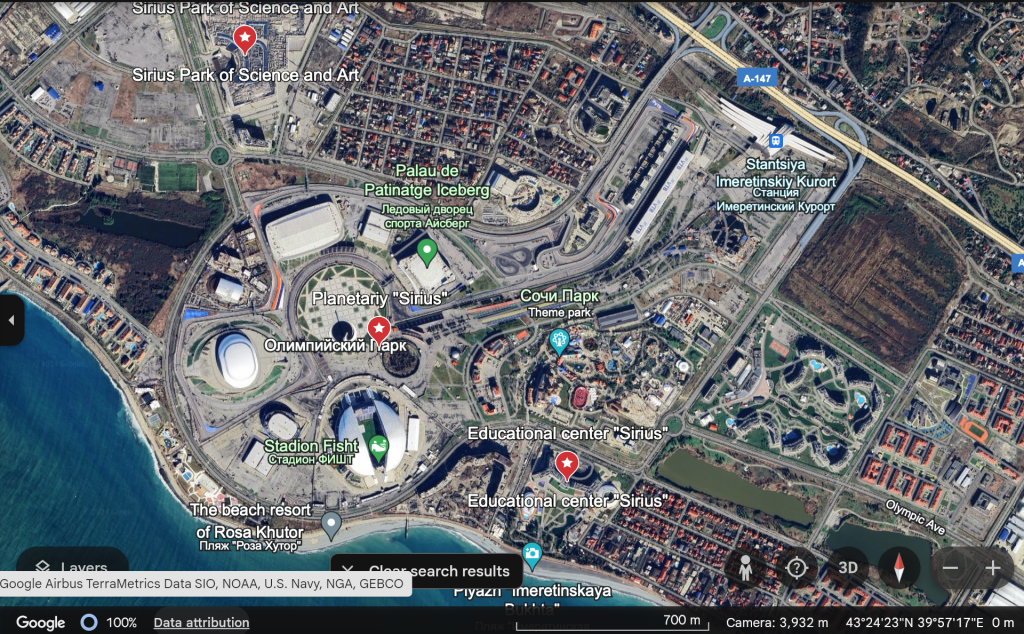
    Sirius Education Center Born from Massive Investment in Sochi

    In 2017, President Vladimir Putin spoke to resident youth at the Sirius Education Center housed in the Sochi Winter Olympic development and explained his inspiration for decreeing it in 2015:

    But I really wanted that project to be expanded with something that would truly be worthy of the Olympic legacy..

    Then it occurred to me: Why just sports? Why just sports for which we have developed an aptitude over decades? We have other abilities – for example, in science, education and the arts. We have always been proud of our musicians and our ballet, and the world admires them.

    Then I remembered that we also have specialised educational institutions that were established back in the Soviet times and still exist. These are not only ten-year schools for future conservatory students but also physics and mathematics schools, chemistry schools, and biology courses that opened later.

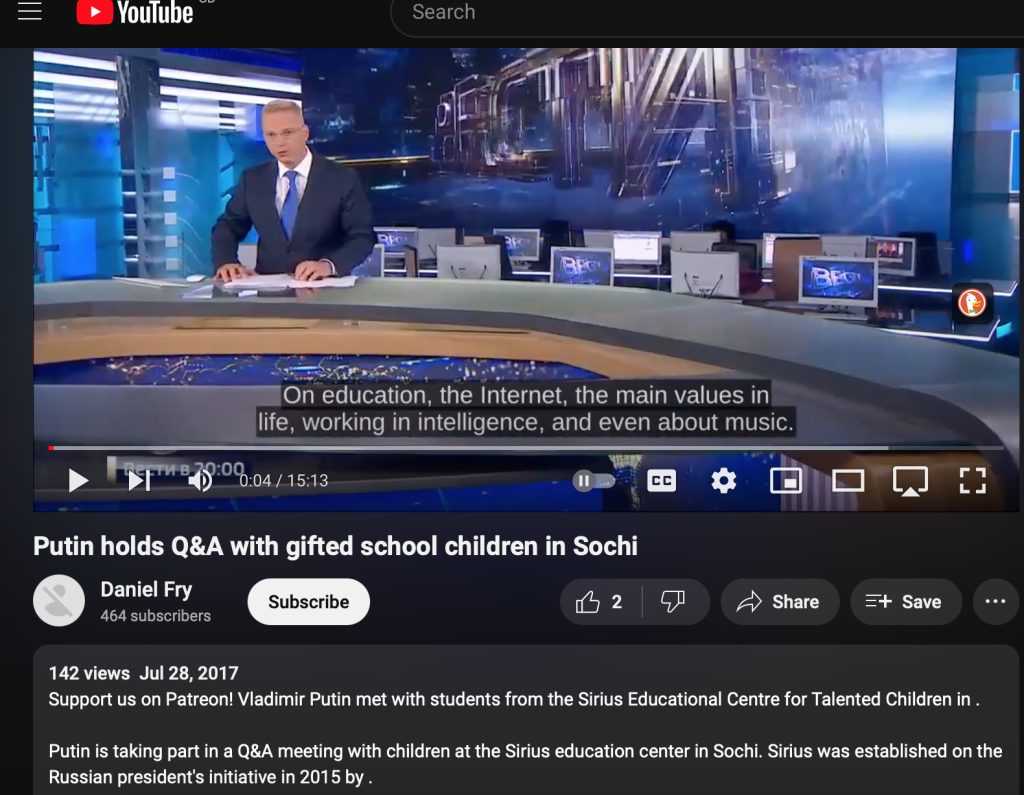
    The entire video of Putin containing the above quote and taking questions from the children at the Sirius Education Center is viewable on YouTube, here. The introduction of the video by an “anchorman” briefly describes Putin’s conversation with the children as focusing “..on education, the Internet, the main values in life, working in intelligence, and even about music.” The anchor used the noun разведка as used in the term intelligence services, or разведывательная служба. See the below screenshot or the video YouTube:

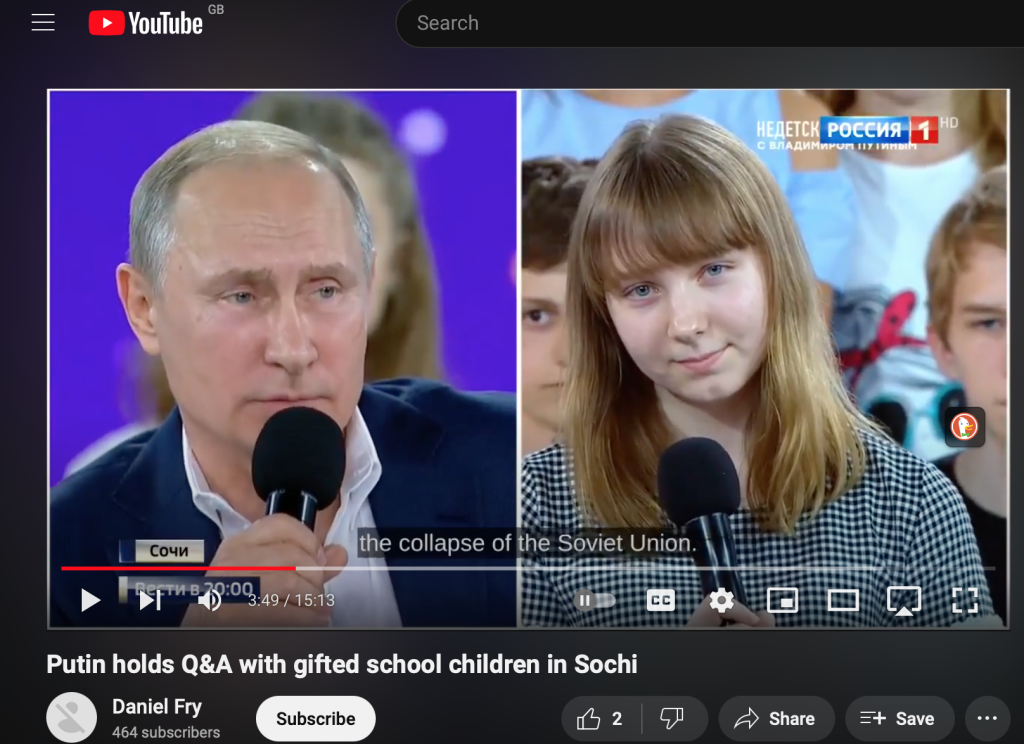
    Asked by one Sirius student what event had the greatest impact on him, President Putin hedged a bit before answering (see below image): “The collapse of the Soviet Union.”

    Putin’s description of his inspiration for decreeing the creation of the Sirius Education Center recalled “specialized educational institutions that were established back in Soviet times and still exist.” This would refer to the Young Pioneer Program for gifted children in Moscow in later Soviet times (1987) rooted in the historic, hardline program called the “Vladimir Lenin All-Union Pioneer Organization,” or Komsomol with origins in the pre-WW2 Soviet Union.

    Historically, the Pioneers had inculcated communist mindsets, socialized, and brainwashed Soviet children in militant ways as in the below video. Gifted Russian youth today tend to be wealthier from the oil rich economy, have travelled more, and have been digitally savvy with the internet to learn of the outside world. Today’s Russian youth have still been socialized for a generation in the xenophobic fear of Putin’s KGB-influenced rule, however, they seem more skeptical of it under the surface. This is partly because Putin wanted them to be innovative, inquisitive, and curious, as foreign intelligence officers were trained to be, minus the affinity problem. That’s just it, the Soviets were never able to completely control the affinity factor.

    And the 2017 video chatting-up the Sirius campus kids was seven years ago with many in that audience coming of military age since then. Many may not be a starstruck as they once were with the egoistic President. However, the program continues growing.

    During WW2 the Young Pioneers took up farm jobs, scrap metal collection, and partisan resistance against Hitler’s forces. And they were thought to be a vehicle for spreading worldwide communist revolution abroad as noted by Gabe Paoletti and John Kuroski, at history blog All Things Interesting. An excerpt: The Soviet Young Pioneers were part of a larger Pioneer movement that sought to foster communist ideology within the youth. This larger Pioneer organization had chapters across the communist world and beyond, including Cuba, China, Mexico, and Finland. When contemporary leftist or rightist dictators in Latin America repeat old Soviet and new Russian propaganda points about the United States, remember the Young Pioneer club chapters in these countries. These disseminated Soviet propaganda the way that China’s Confucius Institutes across the world today promote communist Chinese beliefs.

    Now, Russia’s elite youth movement at Sirius Education Center is partly ideological in remembering their Putin-approved Soviet history, yet more so centered on elite Russian students’ global interface through technology, scientific research, innovation, and cultural outreach through the Sochi campus.

    In contemporary Russia, Putin seems to seek high yield infiltration and relationship networks with other countries through their gifted youth in the Sirius Educational Program. Stalin had exported the socialist Pioneers to socialist and communist countries in Soviet times, Putin reaches out as he dreams of reconstituting the Soviet superpower the free world thwarted at great cost last century.

    In 2018, after Putin hosted Indian PM Narendra Modi at the Sirius Education Center, Modi said, “I was with my friend for the whole day today. When he spoke about the kids of the centre he was emotionally involved. I saw dreams in his eyes. I saw a different person. I saw a Putin who was different from the president.” Indeed, Putin seems energized with corrupting Russian children to support his militant agenda against the free world that he also seeks to emulate through the Sochi Sirius initiative.

    When Modi asked the Russian students which had wanted to visit India, ‘All raised their hands, bringing a smile on the face of PM Modi who invited them to visit India and interact with Indian students. He also promised that he will spend time with them in India.‘ I’m sure he will. And to avert dramatic comparisons, maybe the author of the Alex Rider series took some inspiration from what is happening with Sirius through Sochi and elsewhere.

    Given his asymmetric war on Ukraine from 2014 and his war of aggressive invasion of Ukraine in 2022, bombarding cities where civilians live, and causing hundreds of thousands of casualties on both sides, the most stunning answer Putin gave to a Sirius Educational Center student in 2017 was when Irada Zeinalova asked him the following:

    Irada Zeinalova: ..Could you please name three main values in your life? Three main things in your life?

    Vladimir Putin: In life?

    Irada Zeinalova: Yes.

    Vladimir Putin: Why three? Why not five?

    Irada Zeinalova: Because preparing for this conversation we conducted a poll of Vkontakte users. We asked them what is important to them. In other words, these unmeasurable things can only be compared. It is important for us adults to see how well we understand those who will supersede us.

    Vladimir Putin: All right, I gained some time to think about it while you answered. What could I say? If I had to name three values in life they would be: first, life itself, it is the greatest value, then love, and freedom. It is possible to write treatises on each of these values. They have already been written and can be written without end.

    Speaking about life, which is so valuable, is it possible to define it – is it a purely biological condition or is it intellectual? It is possible to talk at length about the nature of love. There are relations between a man and a woman, but there is also love for parents, and love for the Motherland. But, let me repeat that these are all separate things. What is freedom? Where is it? How far does it go? And where does it end? It ends where we start transgressing on the freedom of other people. How to compare one’s own freedom with the freedom of another person?

    It is possible to think endlessly on each of these positions but in my mind, these are the most important values – life itself, love and freedom.

    Source: https://russialist.org/transcript-putin-meeting-with-students-from-sirius-educational-centre/

    The Federal Territory of Sirius as Tech Hub and 21st Century Russian Elite Development Enclave

    The growing Campus in Sochi has become a potential recruitment base for Olympic, Sports, Space, Business, Intelligence, and military talent.

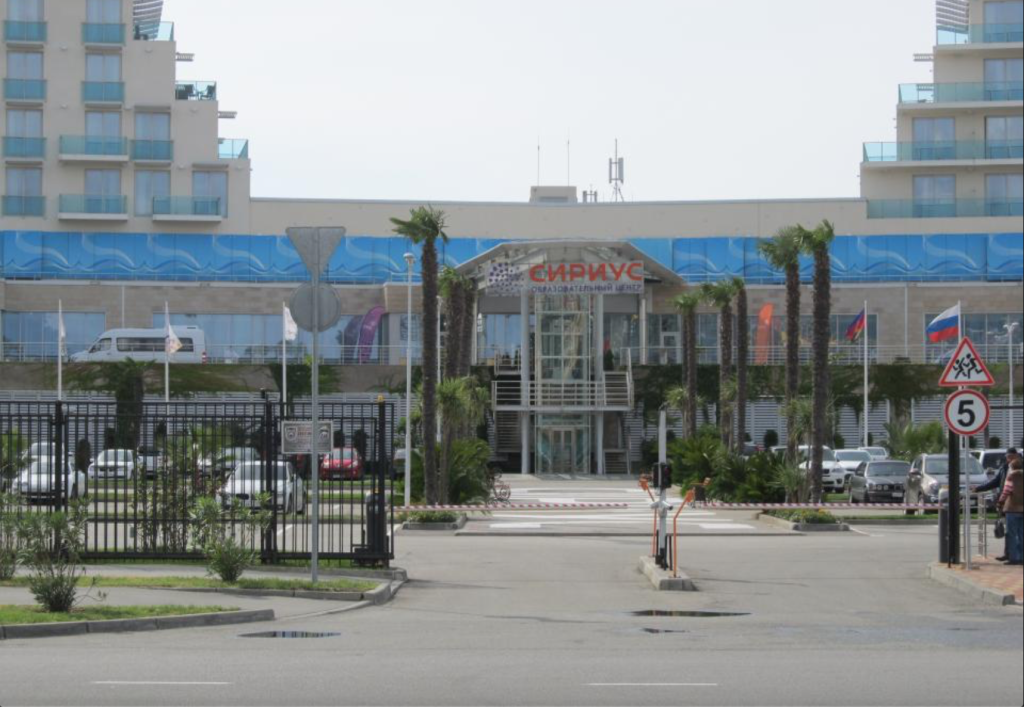
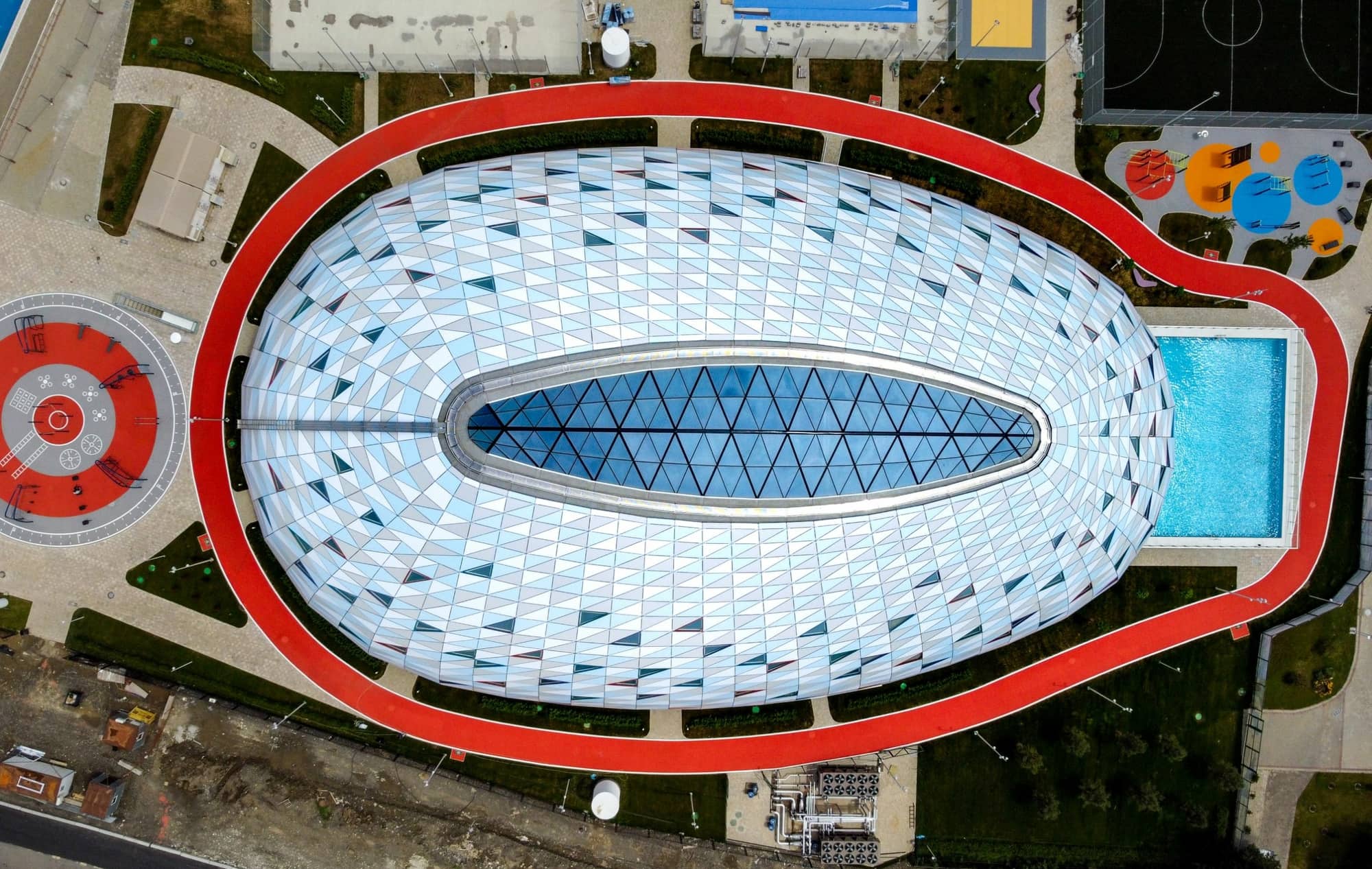
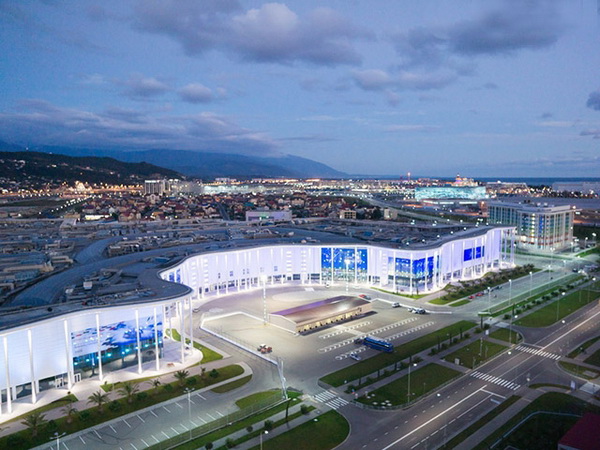
    Images of the Sochi campus show how much investment there was in it. It was largely overseen by Putin oligarch Oleg Deripaska. Now the Russian Olympic village has turned into the new Sirius Federal Territory dedicated to Russia’s future via elite training, education, sports, and perhaps military and intelligence skills for Russian children who can also travel abroad as students enthusiastically volunteered to do to Indian PM Modi.

    Also in Sochi: the Sirius Park of Science and Art:

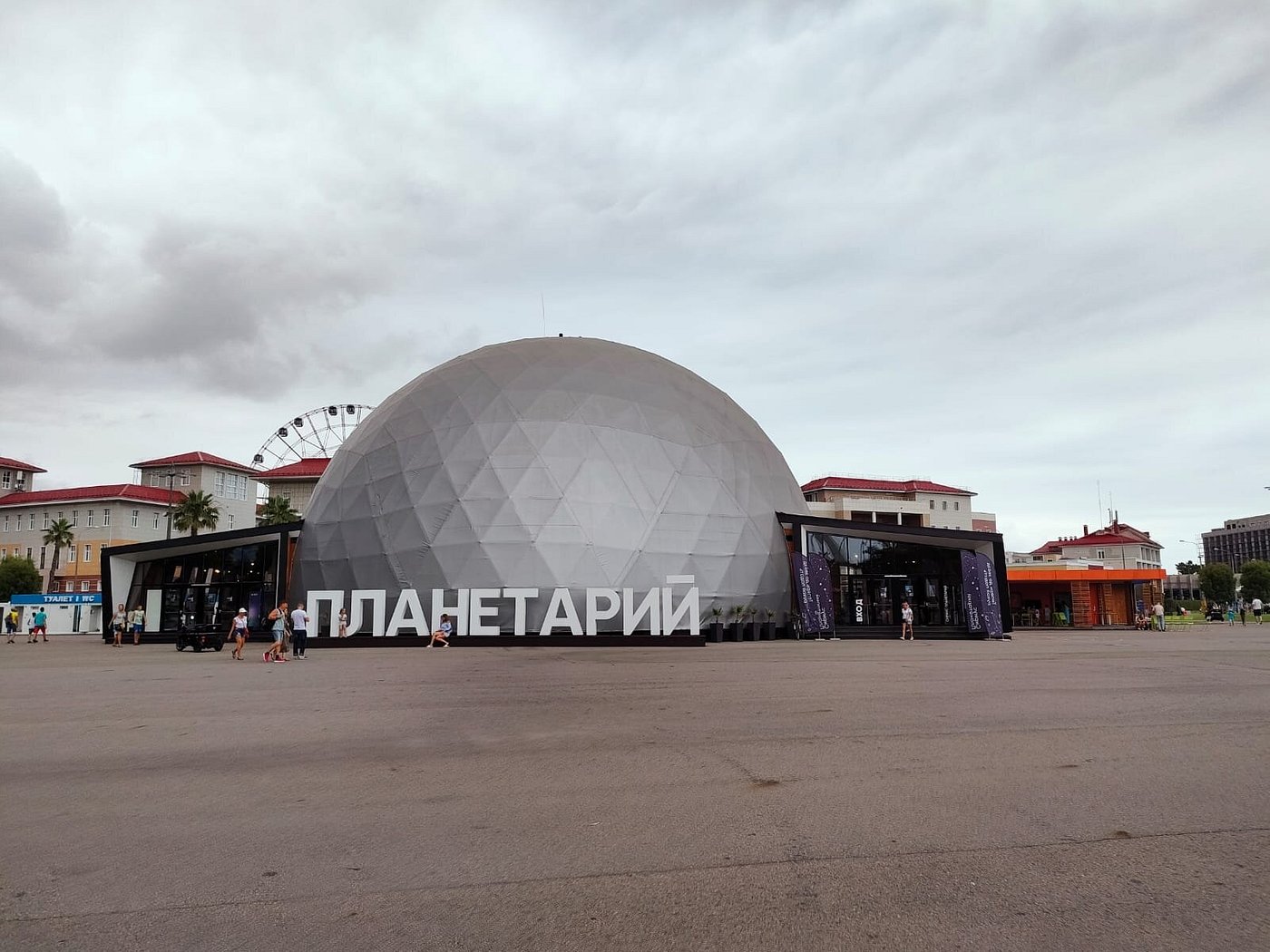
    And the Sirius Planetarium:

    The Sirius focus on recruiting talent for Russia in future Olympics, is shown here:

    Putin is serious about the 2015 Sirius initiative considering its proliferation across Russia’s national sectors, endeavors, and parlance. Yet it is also becoming its own international influence and networking operation.

    Sirius Education Center Hosts World Youth Festival March 2024

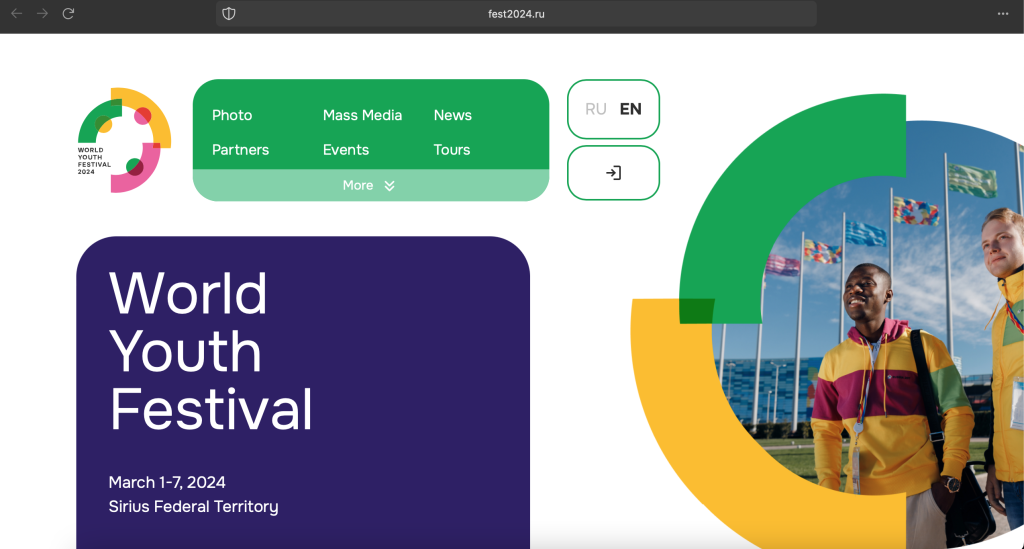
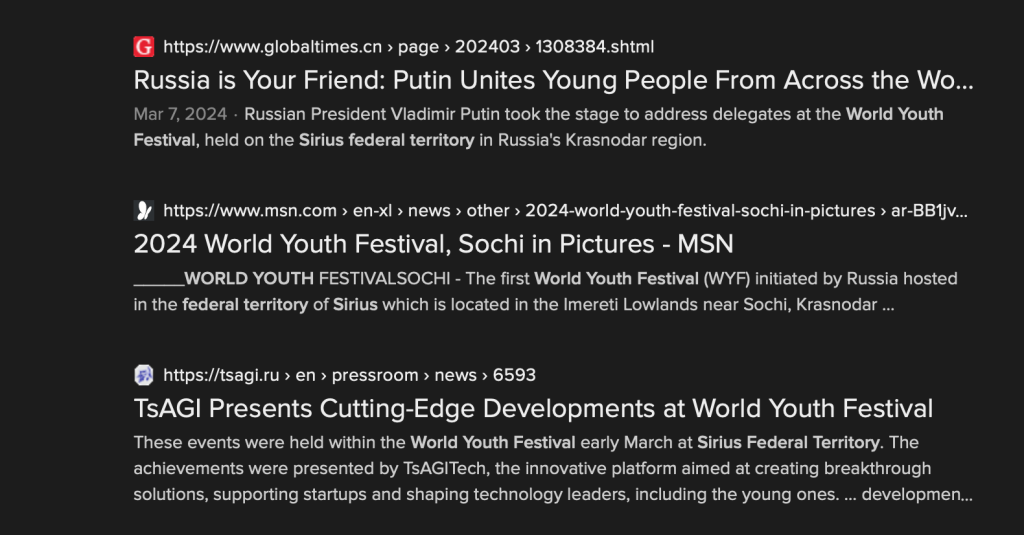
    The Sirius Federal Territory formed from the Black Sea’s Sochi development was the host site for the 2024 World Youth Festival (WYF), serving as a global outreach and influence operation of the Russian regime. It convened in Sochi from March 1st-7th with a projected 20,000 young people attending from around the world, and 2,000 staying for an extensive tour of Russia afterward.

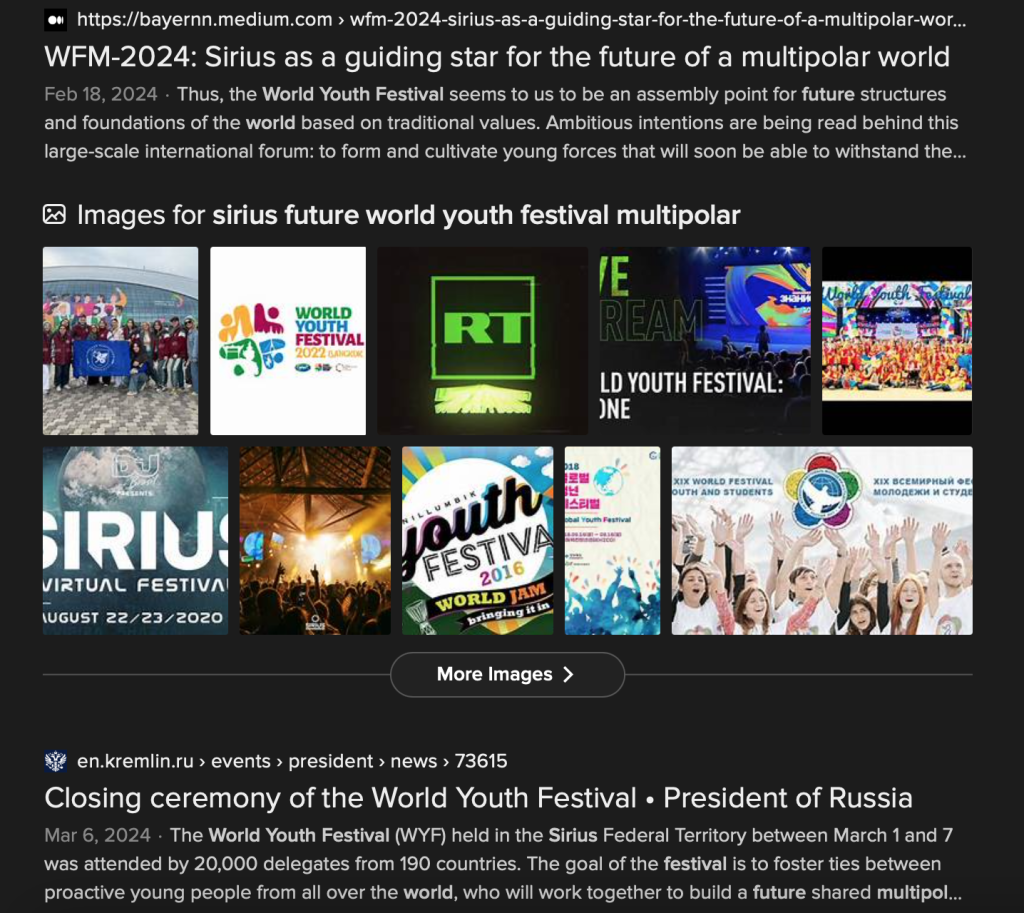
    Sirius’ hosting of the WYF has generated a top Kremlin propaganda talking point, that the United States was a unipolar hegemon after the USSR collapsed, and that the Sirius is a “guiding star” for a future multipolar world. This, while Russian forces and FSB were kidnapping tens of thousand of Ukrainian children displaced by Putin’s war of aggression of February 2, 2022.

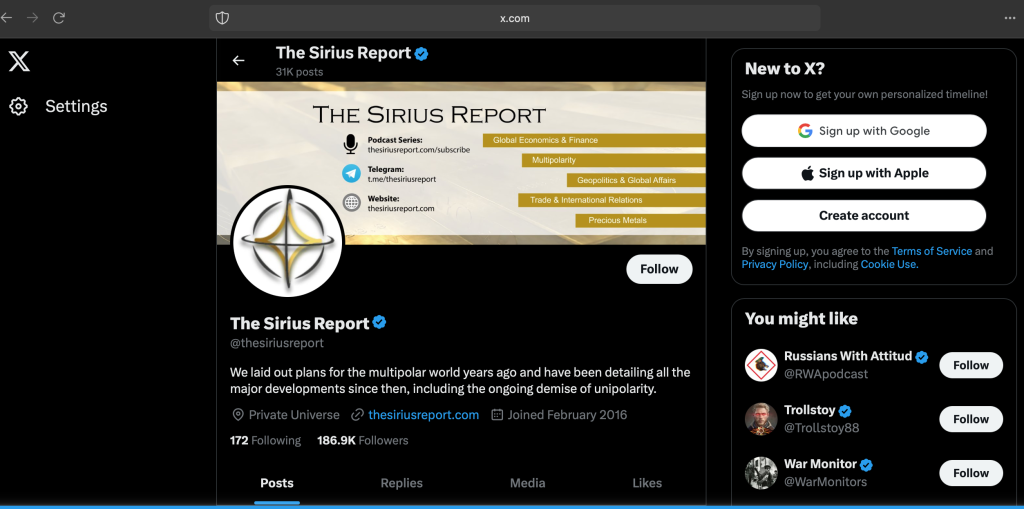
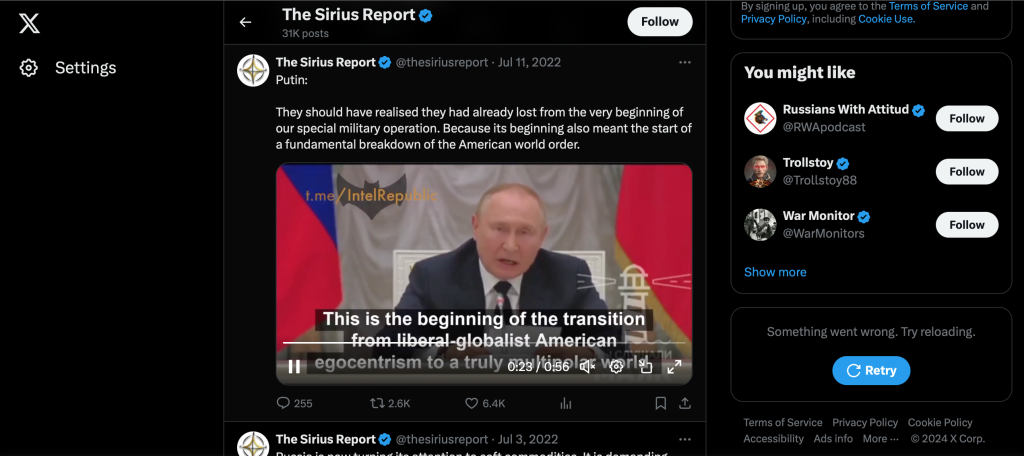
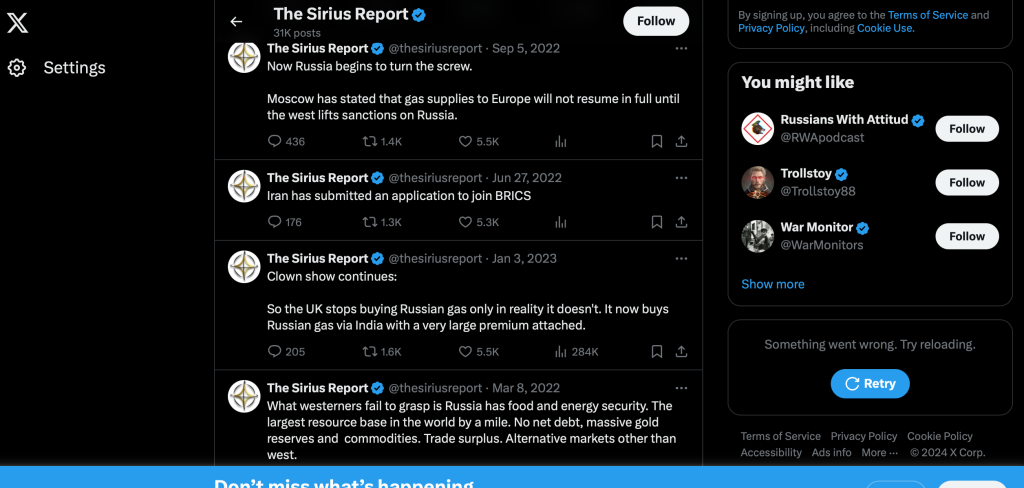
    Observe in the below 3 images how a pro-Putin regime X-profile called “The Sirius Report” disseminates aggressive Russian agitation and war propaganda also focusing on the “multipolar” talking points of Moscow and Beijing as discussed in the soft influence piece above about the 2024 WYF in Sochi by ‘Bayern-Nachrichten,’ writing on Medium (replicated at other blogging outlets):

    Sirius FutureMoscow, Russia

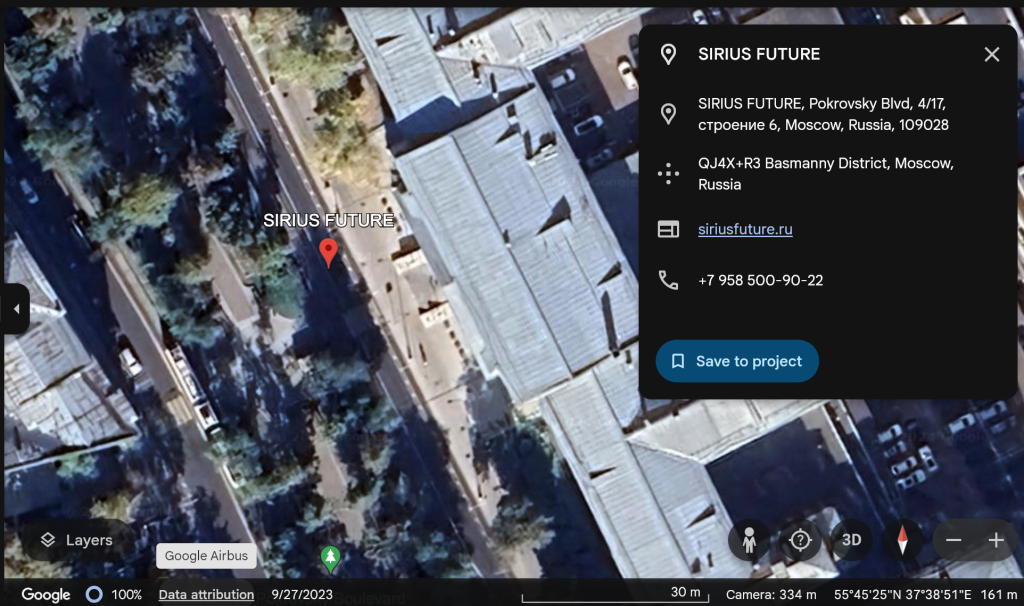
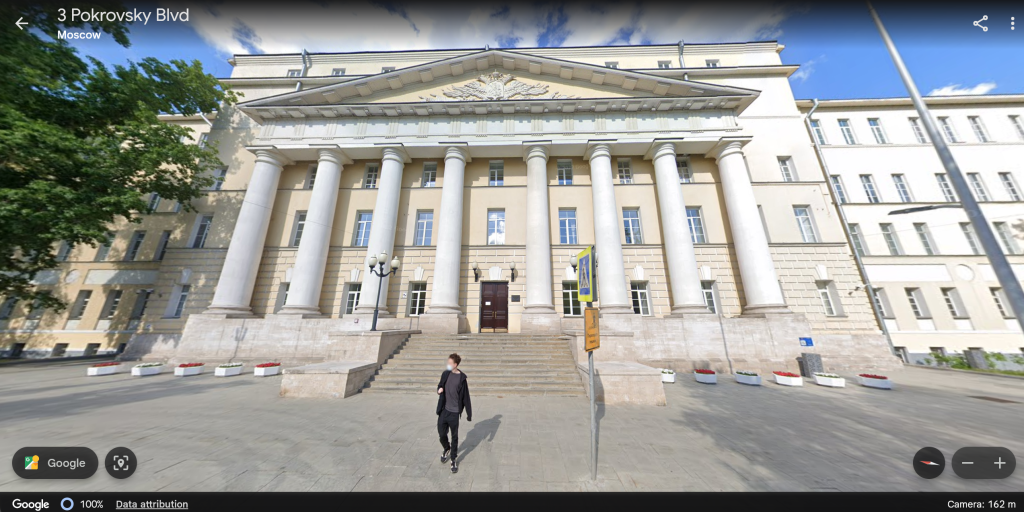
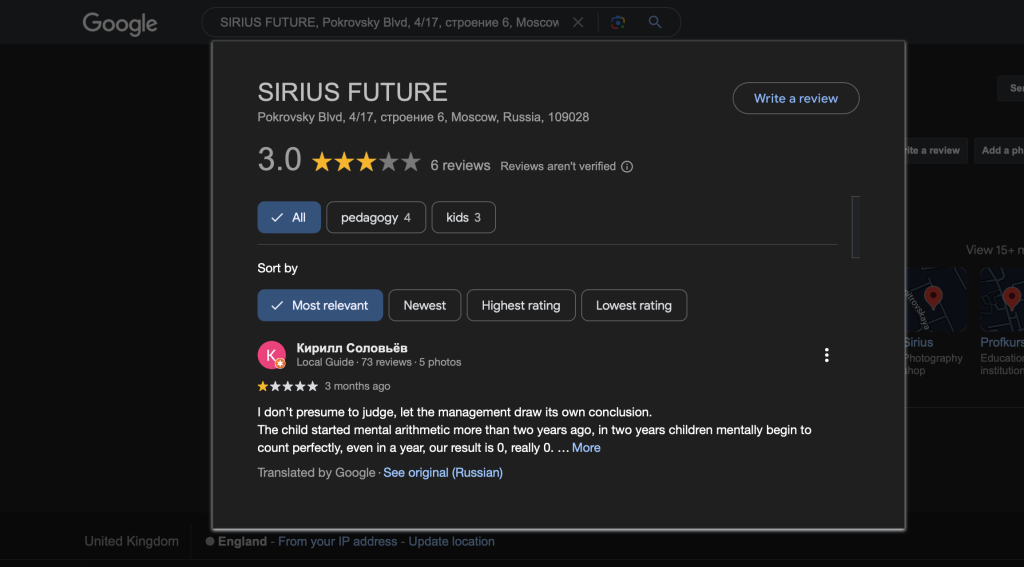
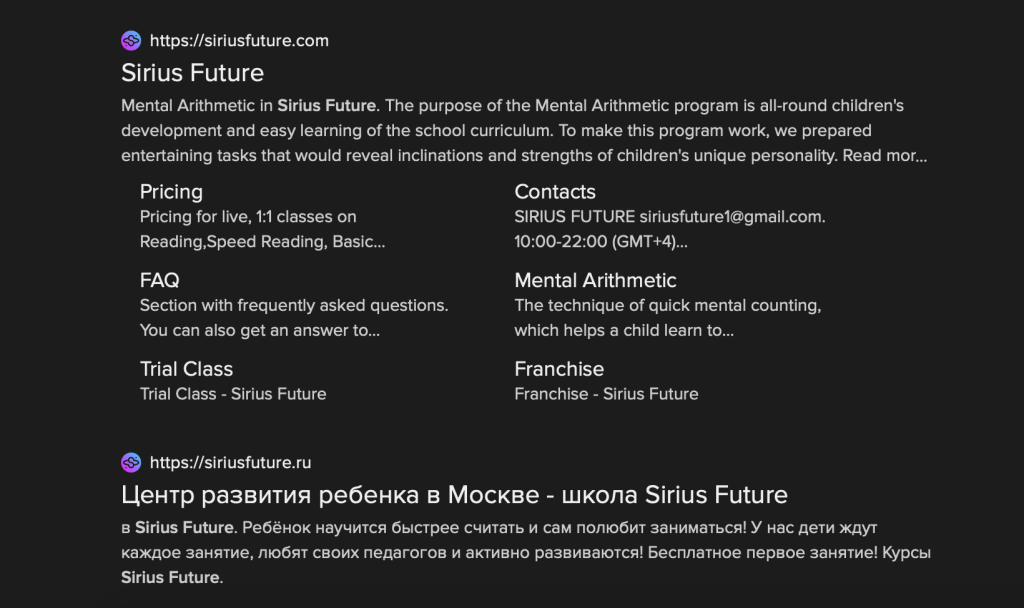
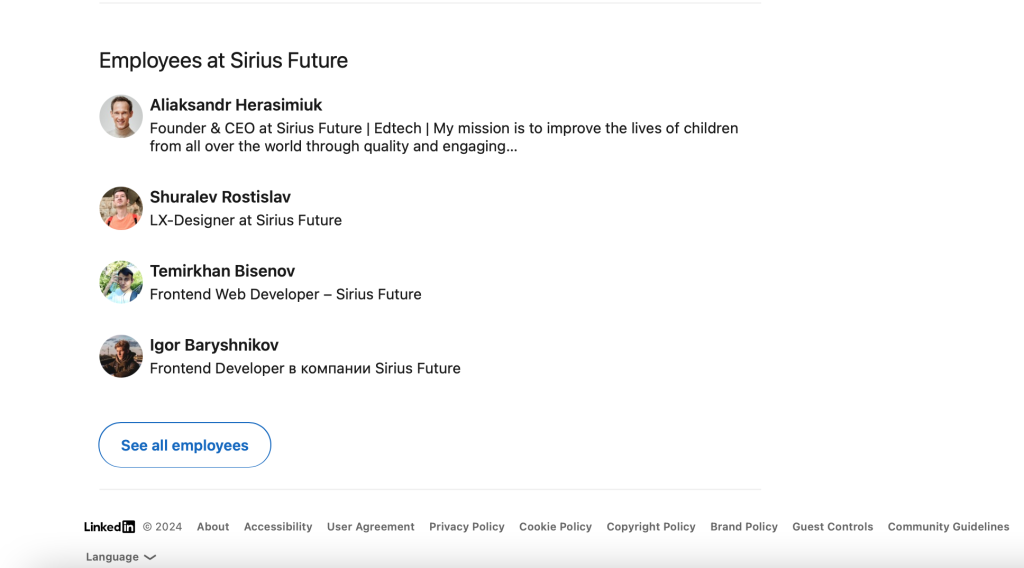
    Serius Education Center has a Moscow counterpart named Sirius Future on the map which is also the name of a Russian software developer online based in Dubai which sells online classes, apps, games, products, and franchises for buyers everywhere. While the PRC’s Confucius Institutes on campuses worldwide are considered centers of communist statist influence and intelligence operations in the name of teaching language and culture, few see the parallel of the Sirius Future program associated with Putin’s Sirius Education Center outreach online, via international conferences, and student exchanges. In Moscow, here is where Sirius Future, the educational institution near the elite corridors of power, appears to be:

    Is the above Moscow’s Sirius Future’s front door? By the map and address and the street view image, it is suggestively close to the mark.

    Sirius Future Online Educational Student and Teacher Apps, Classes, and Games

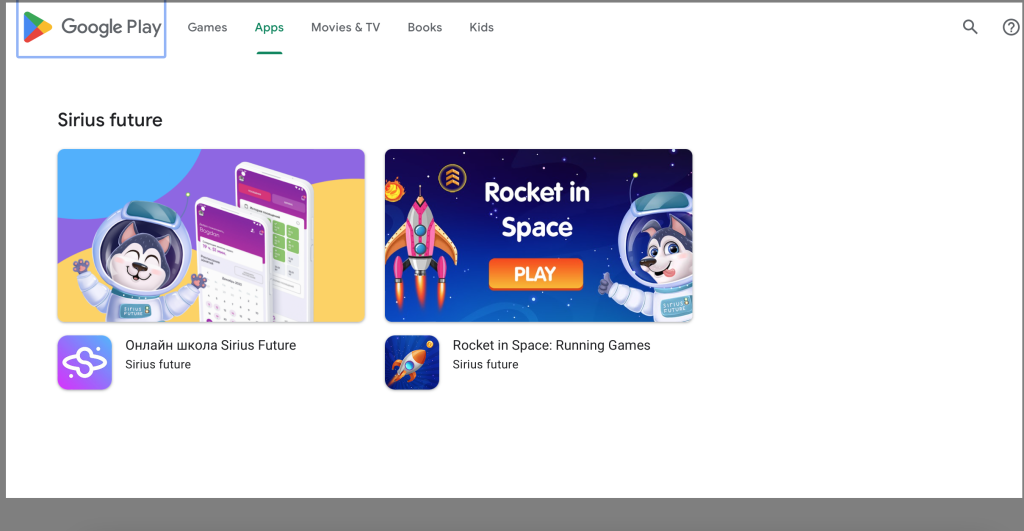
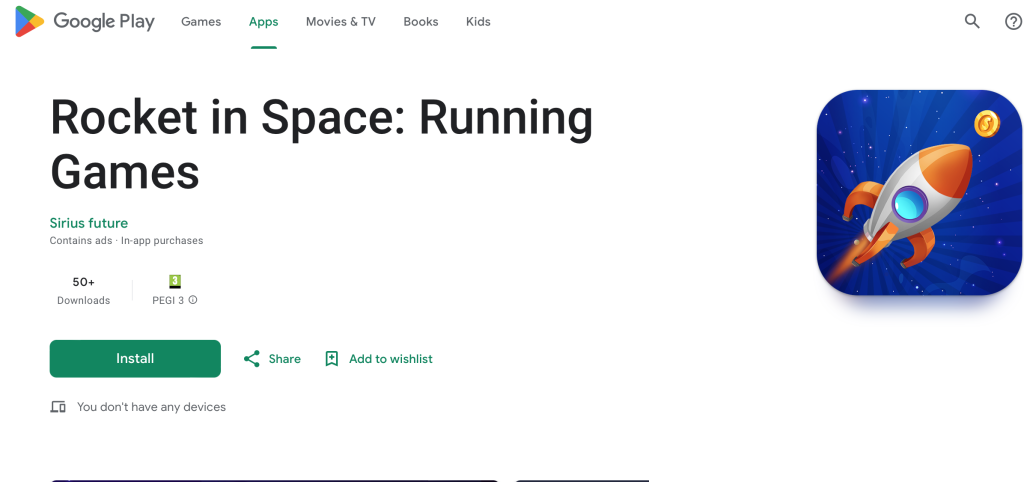
    Sirius Future is also an online education, education app development, teacher resources, and game developer partly based in Dubai, UAE. Below are listings of the Sirius Future software and educational exports via online schooling, apps, games, and teacher resources sold on Google Play and via the Apple App Store in English language:

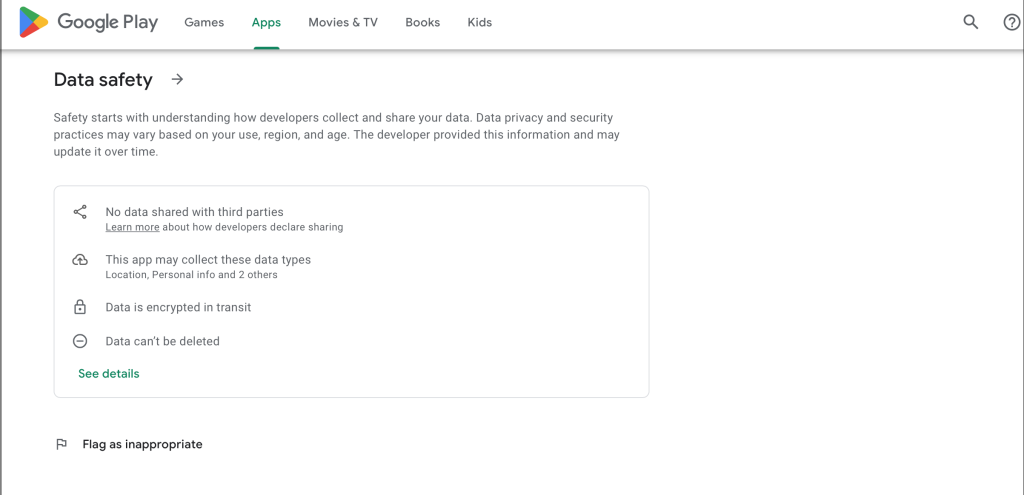
    Sirius Future has a Google app for students and teachers to download and help them manage their busy schedules, as well as a video game designed by its developers in Dubai, UAE. Note that below buyers are advised that data cannot be deleted, and will collect location, personal information, and two other forms of data. See all details in screen grabs:

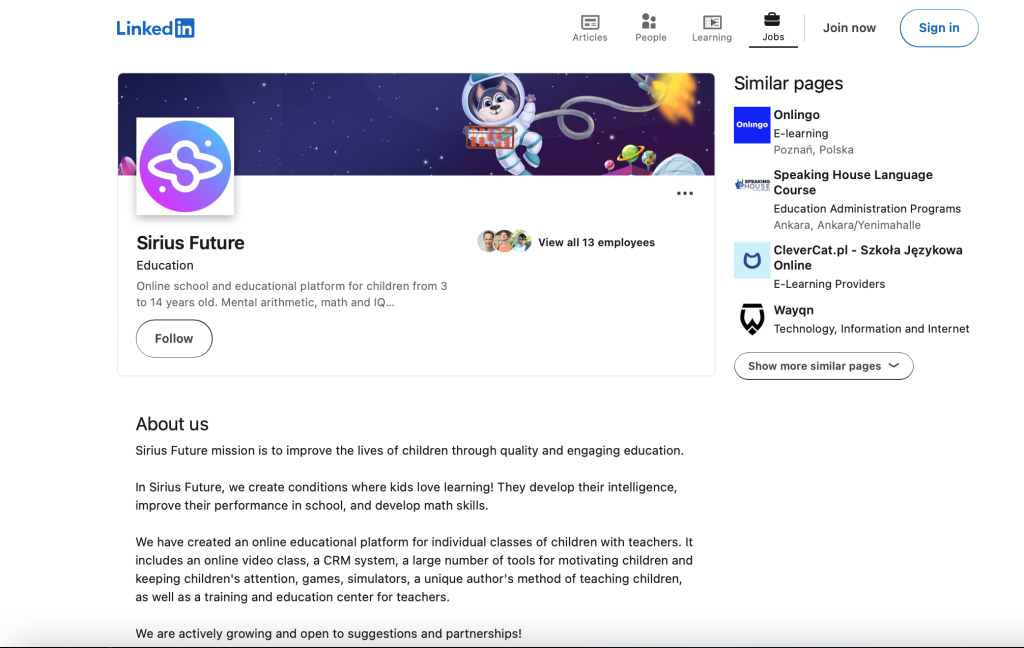
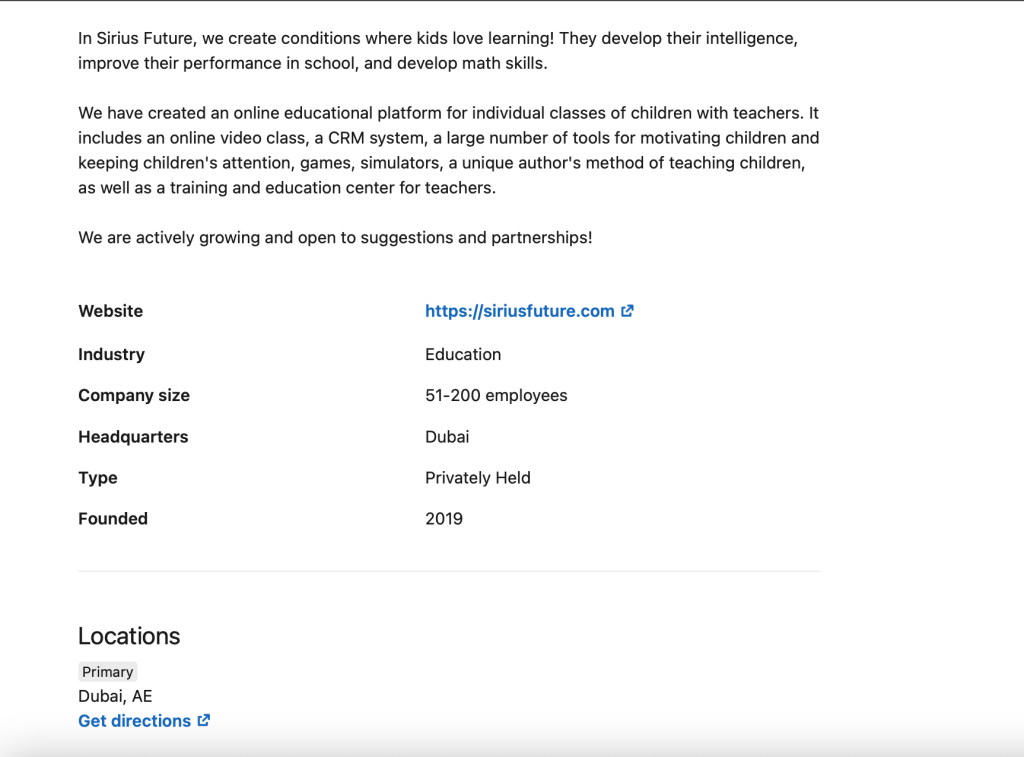
    Sirius Future is on LinkedIn showing its international outreach in English to foreign teachers, parents, schools, educational businesses, and students. See the detailed description of the online teacher-student learning platform below:

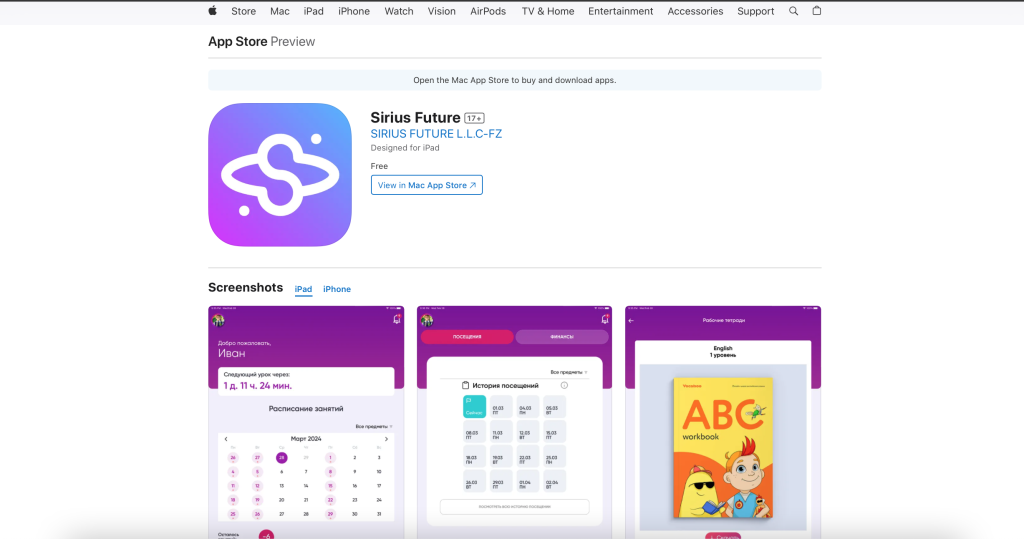
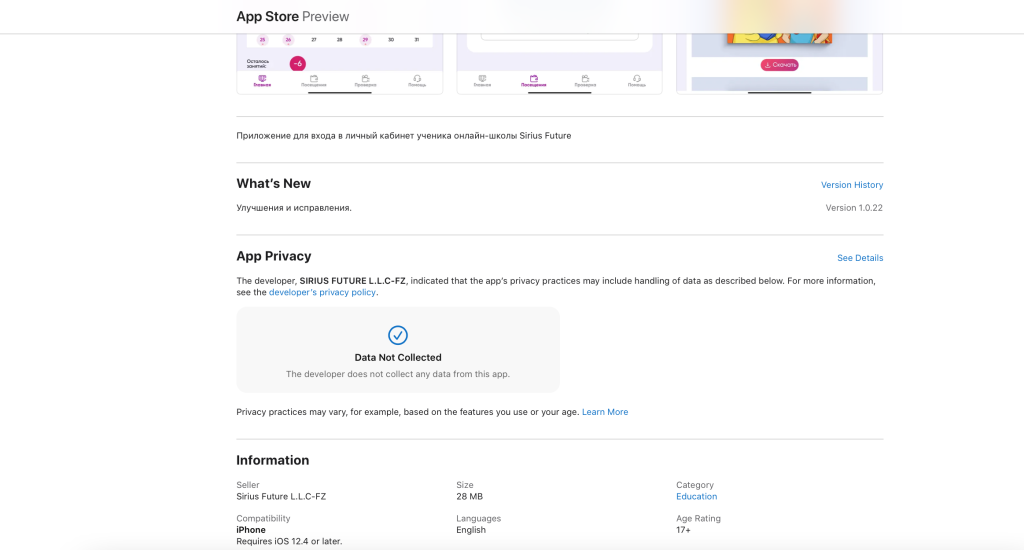
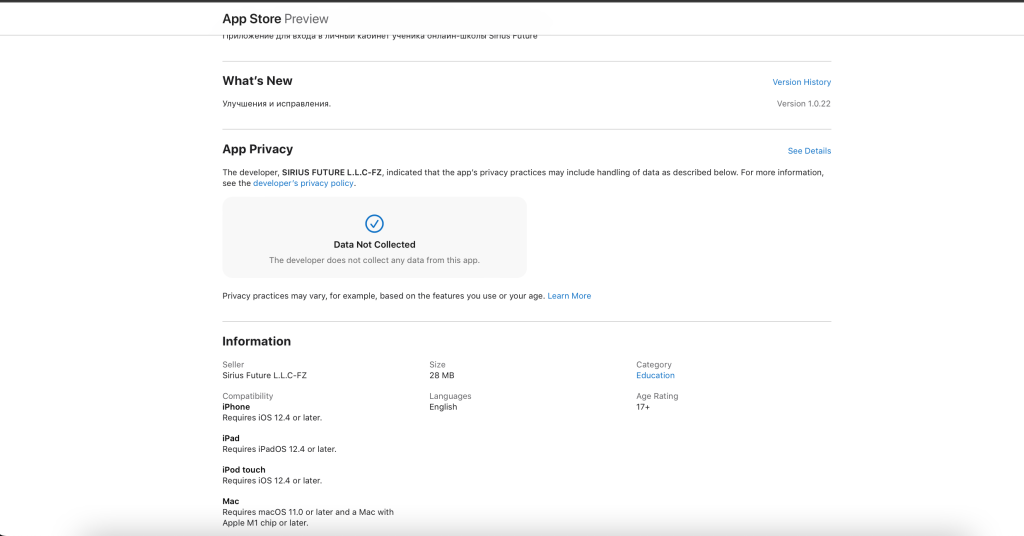
    Apple App store also carries Sirius Future apps. Here is Apple’s App store Preview While data may not be collected according to the Apple App store, may it be viewed in real time without collecting it? Do updates risk introducing malware or exploits?

    Sirius Federal Territory Development

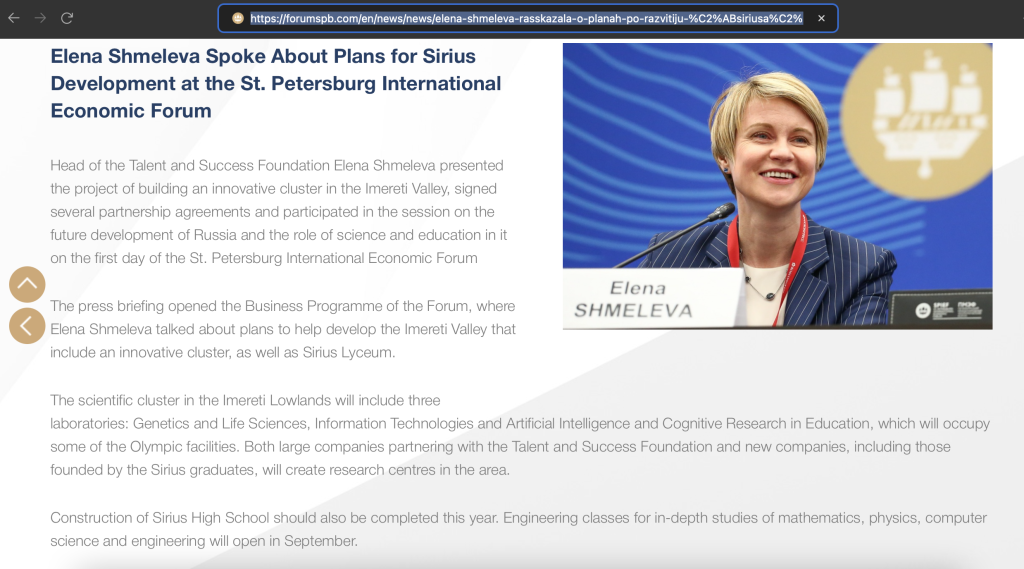
    The Sirius Education Center is overseen by the Talent and Success Foundation, whose director Elena Shmeleva presented future Sirius development plans to the St. Petersburg International Economic Forum. She announced plans for an innovation hub, Sirius Lyceum, and three new laboratories: Genetics and Life Sciences, Information Technologies, and Artificial Intelligence and Cognitive Research in Education. She also projected that the Sirius High School, a STEM-heavy elite academy would be built out within the year. The idea is, with China to corral talent from the developing world and make Russia and China the clearing house for innovation and technology.

    A number of “Sirius” companies in Russia have military contracts or are subsidiaries of the Russian state military industrial complex, or Rostec, such as Konstern Sirius OAO. Rostec has a training, mentoring, and support role in the Sirius Federal Territory.

    As Strategy Shelf recently noted, similar Russian and Chinese outreach to young inventors globally is occurring via U.N.’s WIPO (World Intellectual Property Organization). Who will have rights of access and credits to the intellectual property developed by young minds funded by and going through this program? It is likely that Russia and China seek to use the World Youth Festival to develop relationships among future innovators among nations that Russia and China wish colonize technologically, economically, and for global strategic access. The long game continues and the free world must play it better.

    China is already announcing to the world’s youth that “Russia is Your Friend.”

    Conclusion

    Free nations will recognize autocratic adversaries pursuing programs and initiatives our own leaders have implemented in the past to stay ahead of dictatorships and autocracies, only today in the reverse, to bring autocracy in control of the once free world’s basic operating architectures for trade, security, travel, and individual freedom. Past free world leaders collaborated to stay afloat until the containment and collapse of the Soviet Union ended a terrible, totalitarian nuclear weapons and surveillance state that posed an immense threat in the 20th Century.

    Imitation may be the sincerest form of flattery, but with the international programs and focus on the sort of traditional cultural renewal emerging nations want to hear, even if it is not deliverable by either Xi or Putin, free nations and emerging are attracted to the messages the dictatorial alphas with money and advanced weapons are selling.

    By awakening from our stupor of division, and investing in our own young people, encouraging families to thrive and grow, and renewing leadership in which leaders at all levels and sectors endeavor with sweat, tears, and blood if necessary, to walk softly and carry a big stick we can recover. By selecting leaders who lead by example without egoistically posturing about it in basic, common morality, decency, and honesty, free nations including the United States can come together and right themselves. We don’t need extremists. We don’t need to pass laws that require and enforce morality. We all need to walk in exemplary leadership whatever our level, wherever we are; to walk the line like Johnny Cash with regard to each other, our country, and our allies:

    I keep a close watch on this heart of mine
    I keep my eyes wide open all the time
    I keep the ends out for the tie that binds
    Because you’re mine, I walk the line

    I find it very, very easy to be true
    I find myself alone when each day is through
    Yes, I’ll admit that I’m a fool for you
    Because you’re mine, I walk the line

    As sure as night is dark and day is light
    I keep you on my mind both day and night
    And happiness I’ve known proves that it’s right
    Because you’re mine, I walk the line

    You’ve got a way to keep me on your side
    You give me cause for love that I can’t hide
    For you I know I’d even try to turn the tide
    Because you’re mine, I walk the line…

  • Spotted May 15: FSB Coast Guard and Border Service speedboats on the Nemunas (Neman) River, near Sovetsk, Kaliningrad

    Spotted May 15: FSB Coast Guard and Border Service speedboats on the Nemunas (Neman) River, near Sovetsk, Kaliningrad

    SOURCE: @VideoShips on YouTube

    https://www.youtube.com/watch?v=NKsUBaWpKyE
    Source: @VideoShips on YouTube.

    May 15, 2024: The Coast Guard of the Border Service of the FSB patrols the Neman River border of Russia and Lithuania. They also patrol occupied Ukrainian waters including in the Sea of Azov and the waters off of Crimea. They were formerly called the Maritime Units of the KGB Border Troops. They not only kept unauthorized people out in those days, but also kept people from fleeing Russia.

  • OSINT source: Newly Commissioned Russian Minesweeper Lev Chernavin Spotted in April

    OSINT source: Newly Commissioned Russian Minesweeper Lev Chernavin Spotted in April

    YouTube source @VideoShips posted the newly commissioned Lev Chernavin Alexandrit Class Minesweeper reportedly of the Baltic Fleet spotted April 20th, 2024. Some clear capture of the vessel passing by. Caveat: new source to me. Precise location of vessel not verified.

    https://www.youtube.com/watch?v=l2yafCh8Jt4
  • Russia’s Potential Strategic Use of Boring Machines

    Russia’s Potential Strategic Use of Boring Machines

    Russia’s boring machine capabilities may offer strategic and tactical underground options in a continuing, rolling war of aggression against Ukraine, and possibly beyond. Background: In 2020, Russia’s state owned company JSC Mosinzhproekt claimed the Guinness Book world record for most boring machines operating at once, demonstrating 23 boring machines at work boring new subway lines…

    Membership Required

    You must be a member to access this content.

    View Membership Levels

    Already a member? Log in here
  • Russian EW Supply Lines and Followup Information Ops

    One of Russia’s more successful weapons against Ukraine has been electronic warfare (EW) tech, so Russia’s EW units and supply lines need Ukrainian and international interdiction and customs attention. As of Summer 2022, 3 of 5 of Russia’s EW brigades were reportedly engaged in Ukraine.

    To the extent that Russia sources its EW supplies internationally, Ukraine’s defense contact group allies and partners can do more to assist Ukraine and reduce their own expenses by interdicting the international supply conduits to Russian EW tech.

    Mitre Corporation published in 2020 a report on Russian EW with a significant list of Russian EW systems in the appendix, following a chronicle of Russian military sources discussing Russian REB forces (EW forces) doctrine including an emphasis on “disorganization” of C2 (command and control) in addition to targeting smart weapons, aviation, ISTAR (intelligence, surveillance, target acquisition, and reconnaissance), radar, infrared, vehicles, and communication complexes that depend on electricity, electrical components, and or utilize the electromagnetic spectrum. Since Russia invaded Ukraine and achieved fixed front lines with Ukraine’s forces, its EW jamming, disruption, and operations have gathered strength. U.S. drone makers have found Russian EW to be a barrier to efficacy in Ukraine.

    Russian EW Targets

    Ukrainian forces have reportedly hit likely EW targets in Russia and Ukraine. Earlier this month, Newsweek posted video footage purportedly showed a HIMARS strike on Russian Leer-3 EW system, described as “a six-wheel truck as a command and control post, coordinating three of the Orlan-10 drones fitted with jammers.” Last Summer, The Kyiv Independent cited Russian media reports of a strike on the Zagorsk Optical and Mechanical Plant in the town of Serbiev Posad where “optical and optoelectrical devices for the military, law enforcement agencies, industries, and healthcare” were developed and manufactured. This within hours of a destructive warehouse fire at Voyskovaya Chast (Military Unit) 29235 at Ulitsa Lermontova, д.28, Georgiyevsk, Stavropol Krai, Russia, reportedly depicted on Torreddo’s YouTube channel. Ukraine was also reported to have captured a Krasakha-4 EW system in March 2022, in an intelligence coup.

    Assiduous and continuous locating and tracking of supply sources and lines to Russian companies making Russia’s armamentarium of EW systems can yield new targets and objectives for Ukraine and nations supporting the suppression of international supplies to Russia’s EW complex.

    Information Ops Follow-up

    Generally, when supply lines of the opponent are down, information operations opportunities are up, offering leverage against Russia’s leadership for failing to protect their own military forces. This is true not only for conventional ammunition, weapons, and food, but especially for EW tech.

  • Dictatorships Vie for Control of U.N.’s WIPO

    The World Intellectual Property Organization (WIPO) is a likely vector for intelligence gathering by participants from China and Russia. Last week I noted a young, former Rostec executive (per his LinkedIn profile) working in Geneva, Switzerland apparently assigned to WIPO and more probably than not under pressure of the Putin regime. Indeed, in posted videos…

    Membership Required

    You must be a member to access this content.

    View Membership Levels

    Already a member? Log in here